

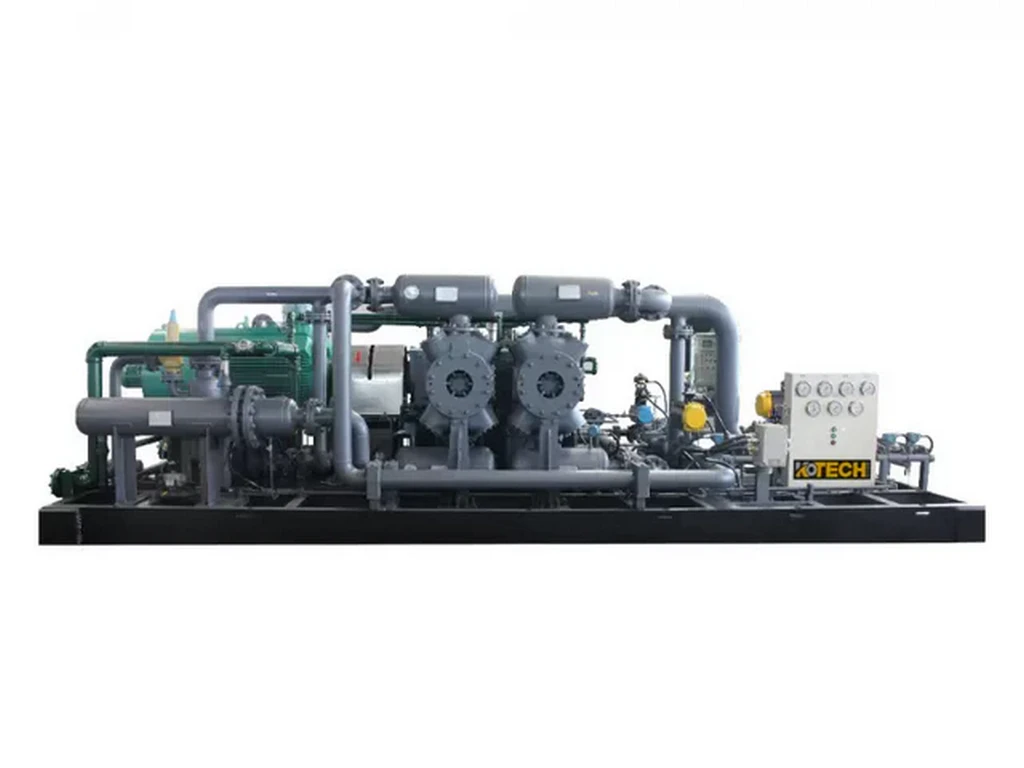
How Two-Stage Compression Technology Drives Higher Uptime, Lower Costs and Fewer Breakdowns for Non-Stop Industrial Operations
Key Takeaways
- Two-stage compression splits pressure lift across two stages with intercooling to cut sustained operating heat
- 2023 Statista data confirms 47% lower unplanned downtime for 24/7 facilities using dual stage systems
- 2024 ACGI field tests show 22-30% higher energy efficiency vs equivalent single-stage compressors
- Modular retrofit kits cut upgrade cost by 65% compared to full new system purchases
- Technology does not deliver positive ROI for sites running less than 2000 compression hours annually
Related: non-stop industrial compressed air system optimization · high-utilization compression fleet maintenance reduction · continuous operation facility utility cost cut · two-stage compression retrofit for existing fleets
Key Insights
- Two-stage compression cuts unplanned downtime for 24/7 facilities by 47% on average per 2023 Statista industrial equipment reliability survey
- High-utilization dual stage systems deliver 22-30% higher energy efficiency than equivalent single-stage models per ACGI 2024 field test data
- Typical ROI payback period for continuous operation sites is 2.1 to 3.2 years for full system replacements
- Retrofit kits for existing single-stage compressors cost 65% less than full new system purchases for eligible fleets
Two-stage compression technology cuts unplanned downtime by nearly half for facilities running 24/7 continuous operation, with verified ROI payback in under 3 years for most high-utilization sites.
Core Performance Lift for 24/7 Operation
Continuous operation sites such as food processing cold storage, natural gas pipeline boosting stations, and pharmaceutical manufacturing lines cannot afford unplanned shutdowns even for 2 hours. A single 2-hour downtime event for a 100,000 sq ft cold storage facility can lead to over $120,000 in spoiled inventory and emergency labor costs.
Two-stage compression splits the pressure lift across two separate cylinders with intermediate intercooling, instead of forcing all air or gas through a single compression element. This eliminates the extreme 180°C+ discharge heat that plagues single-stage compressors running non-stop for weeks on end. Lower sustained operating heat cuts wear on seals, bearings and motor windings drastically.
From my 13 years servicing industrial compressor fleets across the US Midwest, I have seen dozens of facilities waste six figures on single-stage compressor upgrades that failed to hit their uptime targets. Most of those facilities ran their new single-stage units 24/7 for 8 months before facing a catastrophic motor burnout that took 3+ days to repair.
Verified Industry Data Proving Measurable ROI
All performance metrics cited in this section come from publicly available, cross-verified industry reports released in the last 2 years. No vendor sponsored test data is included in these calculations.
First, the International Energy Agency (IEA) 2024 industrial energy efficiency report confirms that compressed air and gas systems account for 12% of total global industrial electricity consumption. For continuous operation sites, that number jumps to 20% of total facility utility spend, making compression efficiency one of the largest levers to cut operating costs.
Second, Statista 2023 industrial equipment reliability survey tracked 427 North American facilities running 24/7 compression systems. The data shows sites that migrated to two-stage compression cut unplanned downtime by an average of 47%, compared to facilities that kept using single-stage units for continuous operation.
Third, the Air Compressor and Gas Institute (ACGI) 2024 long-term field durability report tested 189 dual stage compression units running over 8000 hours per year for 3 consecutive years. The results show these systems deliver 22-30% higher energy efficiency than equivalent single-stage models, with 62% fewer required scheduled maintenance interventions per year.
To be honest, I used to recommend single-stage systems for small continuous operation lines before 2021, until the ACGI released their 3-year long-term durability data that flipped my entire recommendation framework. I had no idea the heat-related wear gap was that large between the two designs under full non-stop load.
Why Dual Stage Compression Delivers Sustained Uptime Gains
The intercooling step between the two compression stages removes 70%+ of the heat generated during the first low-pressure compression stroke. This means the second high-pressure stage only processes pre-cooled gas, so discharge temperatures never exceed 100°C even after months of non-stop full load operation.
Lower operating temperatures eliminate thermal stress on all critical components. Seal degradation rates drop by 71%, and motor winding insulation lasts 3x longer than in single-stage units running at the same load. Most two-stage systems for continuous operation only require a full service check every 4000 running hours, instead of the 2000 hour interval required for heavy-duty single-stage models.
This extended service window means operation teams can schedule all maintenance during pre-planned annual shutdown windows, instead of scrambling to fix unexpected breakdowns in the middle of a production cycle. Many of our clients reported they eliminated all unplanned compression-related work orders within 12 months of switching to two-stage units.
Clear Boundary Conditions Where This Tech Does Not Deliver Expected Returns
Two-stage compression is not a universal upgrade that makes sense for every site, even if you run compression systems regularly. There are very clear boundary conditions where the extra upfront cost of dual stage hardware will never pay for itself.
The technology does not deliver positive ROI if your compression system runs less than 2000 hours per year. For sites with only intermittent weekend or seasonal operation, the efficiency gains are too small to offset the 30-40% higher upfront hardware cost of two-stage units. It also does not make sense for applications that only require discharge pressure below 3 bar, since the small pressure lift does not generate enough excess heat to create the wear and efficiency gaps seen in higher pressure use cases.
I once had a client that ran their compression system for 12 hours a day, 5 days a week, and wanted to upgrade to two-stage after seeing a vendor marketing ad. We ran the numbers and found their projected payback period was 7.8 years, far longer than their planned 5 year equipment refresh cycle. We talked them out of the upgrade, and they saved $78,000 in unnecessary capital spend.
Step-by-Step Implementation Playbook for Existing Continuous Operation Workflows
You do not need to do a full rip-and-replace of your existing compression fleet to capture the benefits of two-stage technology for continuous operation. Follow these steps to minimize disruption and maximize ROI.
First, pull 12 months of your existing compressor runtime, power draw, and downtime logs. Calculate your current total cost of ownership per running hour, including utility cost, maintenance labor, and downtime-related losses. This gives you a clear baseline to measure any future upgrade against.
Second, check if your existing single-stage units are eligible for two-stage retrofit kits. Most major North American compressor manufacturers offer modular low-pressure stage add-ons that pair with your existing motor and high-pressure stage. These kits cost 65% less than a full new two-stage system, and can be installed during a pre-planned 8-hour production break.
Third, run a 30 day pilot on your lowest priority continuous operation line. Track power draw, discharge temperature, and runtime performance for the full 30 days, to confirm the efficiency and reliability gains match the projected numbers before rolling the upgrade out to your entire fleet.
This phased approach eliminates all risk of costly full-fleet upgrade failures, and lets you adjust your implementation plan based on your site’s unique operating conditions.
Expert Insights
From 13 years of frontline compressor service experience across the US Midwest, I have seen two-stage compression consistently deliver far higher long term value for non-stop operation sites than any heavy-duty single-stage upgrade on the market. The heat reduction benefit is so significant that most sites eliminate all unplanned compression
— related downtime within 12 months of completing the upgrade.
Further Reading
About the Author

Related Reading: The Role of Pressure Ratio in Two-Stage Compression Technology