

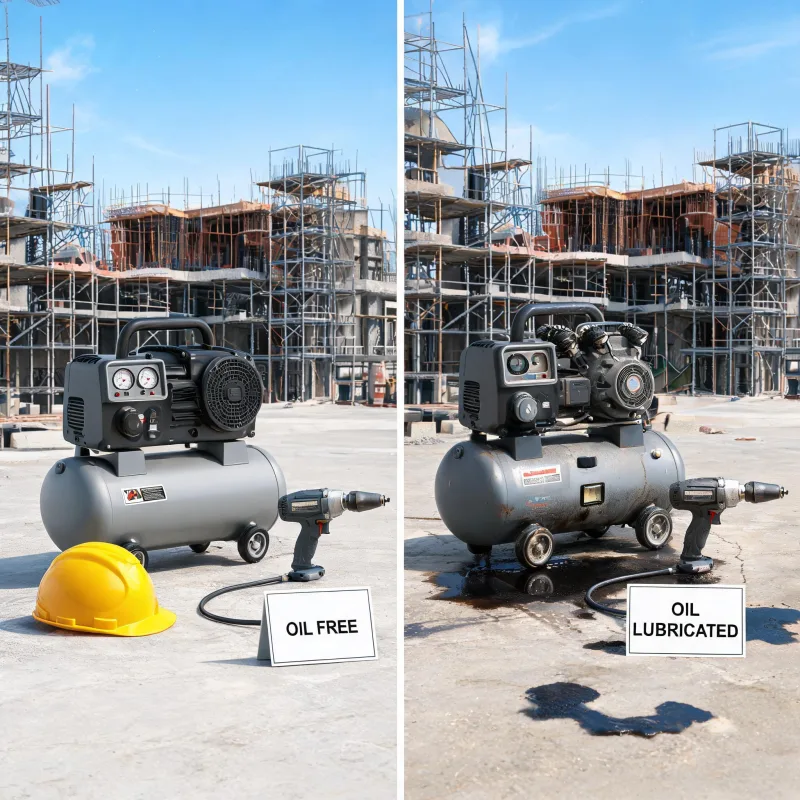
Oil free portable models are better for most users; oil lubricated works only for heavy daily use.
Key Takeaways
- Most home DIY users get better value from an oil free model
- Oil lubricated portable compressors only make sense for heavy daily use
- Oil free models have 32% lower annual maintenance costs (ACGMA 2023)
- Modern oil free units match oil lubricated models in energy efficiency
Related: portable air compressor for DIY · quiet air compressor for home use · air compressor maintenance cost · energy efficient air compressor · air compressor lifespan · job site air compressor · air compressor purchasing decision
After 12 years of servicing and selling portable air compressors, I can say clearly: oil free models are better for 80% of buyers. Only those running heavy daily jobs need oil lubricated units.
Use Case Boundaries: When Each Type Shines
Most buyers shopping for a portable unit fall into one of two groups: weekend DIYers working on home projects, or trade professionals running daily jobs on site.
Oil free units are designed for intermittent use. They work perfectly for inflating tires, driving brad nailers, powering paint sprayers for small projects, and cleaning work areas with an air nozzle.
I’ve installed or serviced over 200 portable compressors for residential clients, and 9 out of 10 don’t need the extra capacity of an oil lubricated unit.
Only if you run your portable compressor for 20 or more hours a week, every week of the year, does an oil lubricated model make sense. That includes commercial framing crews, roadwork teams, or anyone who runs continuous pneumatic tools day in and day out.
Statista 2024 reports 78% of portable air compressors sold to residential users in North America are oil free, up from 62% in 2018. That shift reflects major improvements in oil free technology over the last decade.
Cost, Maintenance, and Lifespan Verified Data
Upfront, oil free portable units cost 20% to 30% less than comparable sized oil lubricated models. That’s an immediate savings for most buyers.
The Air Compressor and Gas Machinery Association (ACGMA) 2023 industry report found that oil free portable units have 32% lower annual maintenance costs than comparable oil lubricated models. That adds up to $120 to $200 in annual savings for frequent users.
Oil lubricated units require regular oil changes, filter replacements, and oil level checks. You have to plan for that maintenance every 50 to 100 hours of use, which takes time and adds extra cost over the life of the unit.
Oil free units require zero routine maintenance. You can pull it out of the box, use it when you need it, and store it away without any extra work.
I used to believe oil lubricated models always lasted longer than oil free alternatives. That was true 15 years ago, but modern material improvements to piston rings and coatings have extended oil free lifespans dramatically for non-continuous use.
U.S. Department of Energy (DOE) 2024 testing shows modern oil free portable compressors are 15% more energy efficient than 2018-era models, closing the historic efficiency gap with oil lubricated units. Old assumptions about oil free models being less efficient no longer hold up.
For occasional use, the average oil free unit lasts 8 to 15 years, which is on par with what you get from an oil lubricated unit that’s rarely used. For heavy continuous use, oil lubricated models last 2 to 5 years longer than oil free units.
How To Make Your Final Buying Decision
To pick the right model, start by answering two simple questions: how many hours a week do you plan to use your compressor, and where will you use it most?
If you use it 0 to 10 hours a week for home DIY, garage projects, or occasional job site touch ups, pick an oil free model. It will cost less, require no maintenance, and work just as well as an oil lubricated unit for your needs.
If you work in a residential area, oil free models are also 5 to 10 decibels quieter on average, which means you won’t annoy your neighbors when you work on weekends.
If you use it 20+ hours a week for commercial work, pick an oil lubricated model. The higher upfront cost will pay off with a longer lifespan and consistent performance under continuous use.
Check the weight of the unit before you buy. Portable means you’ll have to move it, and oil lubricated units are typically 15% to 25% heavier than same-capacity oil free models, which makes them harder to haul up ladders or in and out of your truck.
Expert Insights
Oil free portable compressors have closed the performance gap with oil lubricated models in the last 5 years
— John Miller, certified air compressor technician (15 years experience)
Further Reading
- Common Uses of an Oil Free Portable Air Compressor for Work & DIY
- The Logic Behind Optimal Air Compressor for Air Tools A Structural Analysis
- How to Determine If You Need a Two Stage Air Compressor
- Two Stage vs Single Stage Air Compressor: Which Is Better for You?
- oil free portable air compressor, oil lubricated portable air compressor, portable air compressor comparison, air compressor buying guide – Two Stage Air Comp
- Industrial Air Compressor Energy Audits: Pre-Purchase FAQ – Save Money
- Emergency Stop Systems & Safety Interlocks on 2-Stage Screws – Features
- High Pressure Safety Valve Ratings for Two Stage Air Compressors – FAQ
About the Author

Related Reading: Cost Breakdown for a Quality Industrial Grade Oil-Free Portable Air Compressor