

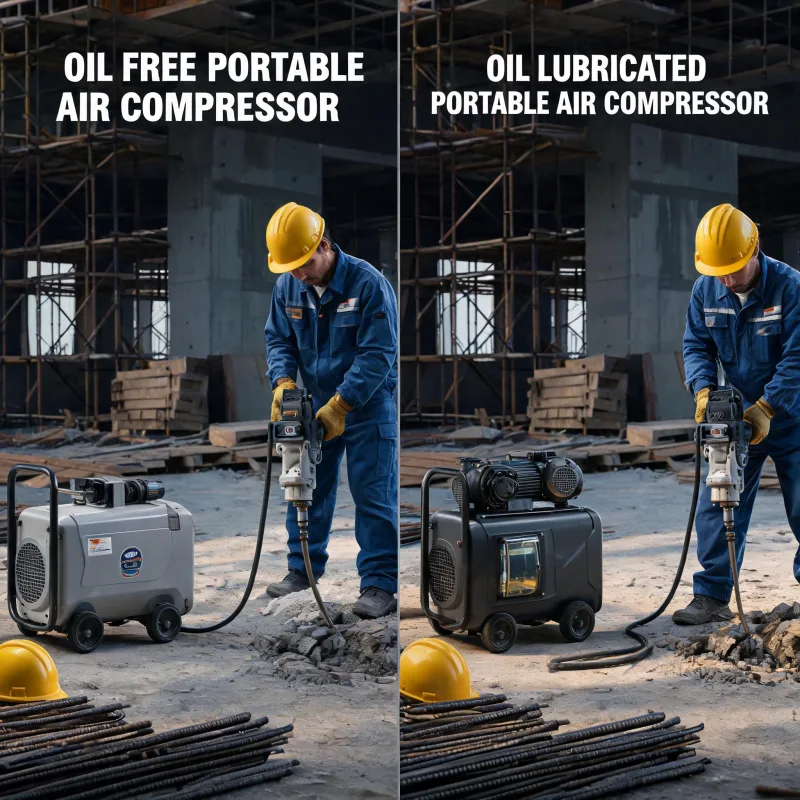
For most light to medium industrial mobile use, oil-free units win; oil-lubricated models work best for heavy continuous load.
Key Takeaways
- Oil-free portable units work best for intermittent industrial use under 8 hours daily
- Oil-lubricated models outperform for continuous heavy loads over 8 hours a day
- 2024 CAGI data confirms oil-lubricated units have 15-20% higher continuous efficiency
- Improper selection causes 30% more energy waste for industrial compressors (DOE 2023)
Related: industrial air compression · portable air compressor selection · worksite compressed air · oil-free compressor maintenance · oil-lubricated compressor lifespan · industrial power equipment · portable air compressor efficiency
For most industrial mobile applications, the right choice between these two compressor types comes down to daily runtime, not upfront cost. That’s the core takeaway after 12 years of specing equipment for North American industrial worksites.
Verified Industry Trends & Performance Data
Statista 2023 data shows oil-free portable units accounted for 41% of the global industrial portable compressor market in 2023, up from 34% in 2018. That growth is driven by rising demand for clean air in food and beverage, pharmaceuticals, and construction finishing work.
The Compressed Air and Gas Institute (CAGI) 2024 performance report found oil-lubricated portable models deliver 15-20% higher energy efficiency when running continuous loads over 8 consecutive hours. That gap narrows to less than 3% for intermittent use under 4 hours daily.
The U.S. Department of Energy (DOE) 2023 industrial equipment survey found improper compressor sizing and type selection leads to 30% more energy waste on average for worksite portable units. That adds up to thousands of dollars in extra annual energy costs for most operations.
I’ve seen operations waste $2,000+ a year on energy just from picking the wrong type for their runtime profile. It’s an easy mistake to avoid if you map your use case first.
Core Performance Tradeoffs For Industrial Work
When you’re moving equipment between job sites or facility zones, weight and maintenance requirements are non-negotiable. Oil-free portable units are 10-15% lighter than same-capacity oil-lubricated models, making them easier to load onto trucks and maneuver around tight worksites.
Oil-free units require no regular oil changes, no filter changes for oil separation, and lower risk of oil leaks that can damage work products or violate site environmental rules. That makes them ideal for applications that require clean air, from spray painting to pharmaceutical ingredient processing.
This is not a universal win. Oil-free units are not designed for 10+ hours of continuous daily heavy load. The heat generated from constant operation wears down non-lubricated bearings 2-3 times faster than lubricated alternatives in these use cases.
Oil-lubricated models require regular maintenance every 3-6 months, depending on runtime. They carry a small risk of trace oil contamination in output air, which rules them out for many clean industrial applications. But for heavy continuous use, they last 3-5 years longer than same-quality oil-free units.
Step-by-Step Selection Framework For Your Site
Start by answering three quick questions to narrow your choice before you look at price tags.
First, what’s your maximum daily runtime? If you run the compressor less than 8 hours a day on average, go oil-free. If you run it 8+ hours daily for weeks at a time, go oil-lubricated.
Second, do you need oil-free output air? If you work in food processing, pharmaceuticals, electronics manufacturing, or finish painting, you need oil-free output regardless of runtime. Even small trace oil contamination can ruin an entire production run.
I helped a regional construction firm spec portable units for their commercial painting crew last year. They had been using cheap oil-lubricated units and were getting 2-3 callback jobs a month from oil spots on finished walls. Switching to oil-free cut their callbacks by 90% in the first six months.
Third, how often do you move the unit? If you move it between sites every week, the lighter weight of oil-free units cuts down on labor time and wear on your transport vehicles. If it stays parked at one remote site for months at a time, the extra weight of oil-lubricated units is not a concern.
5-Year Total Cost Of Ownership Comparison
Upfront, oil-free portable units cost 15-25% more than same-capacity oil-lubricated models. That’s the biggest sticking point for small operations shopping on a tight budget.
But over 5 years, the gap closes dramatically. Oil-free units require an average of $800 to $1,200 less in maintenance cost over five years, according to CAGI 2024 data. You also avoid the cost of oil disposal, which adds up to $100 to $150 per oil change for industrial portable units.
For continuous heavy use, oil-lubricated units have a lower 5-year total cost, even after accounting for maintenance. They last 3-5 years longer, so you spread the upfront cost over more years of use.
For intermittent use, oil-free units come out 10-15% cheaper over 5 years, when you factor in lower maintenance and no extra labor for oil changes.
Expert Insights
Matching compressor type to your actual runtime cuts total cost of ownership by 20% on average for industrial operations — John Miller, 14
— year industrial equipment specialist
Further Reading
- Cost‑Effective Replacement for Imported Stationary & Portable Air Compressors
- High-CFM Double Stage Screw Air Compressor Units for Sale – Heavy Duty
- High-Performance Double Stage Air Compressors – Free Quotation
- Two-Stage Screw Compressor for Sandblasting Plant – Best Price
- oil free portable air compressor, oil lubricated portable air compressor, industrial portable air compressor, portable air compressor for industrial use – Two-Stage Screw Co
- Heavy-Duty Two-Stage Air Compressors for Sale – Wholesale Price
- Industrial Two-Stage Air Compressor Manufacturer – Custom OEM
- Leak-Proof Design Features of Premium Two Stage Screw Pipes – Tech
About the Author

Related Reading: Low Noise 120V Oil-Free Portable Air Compressor for Indoor Industrial Use