

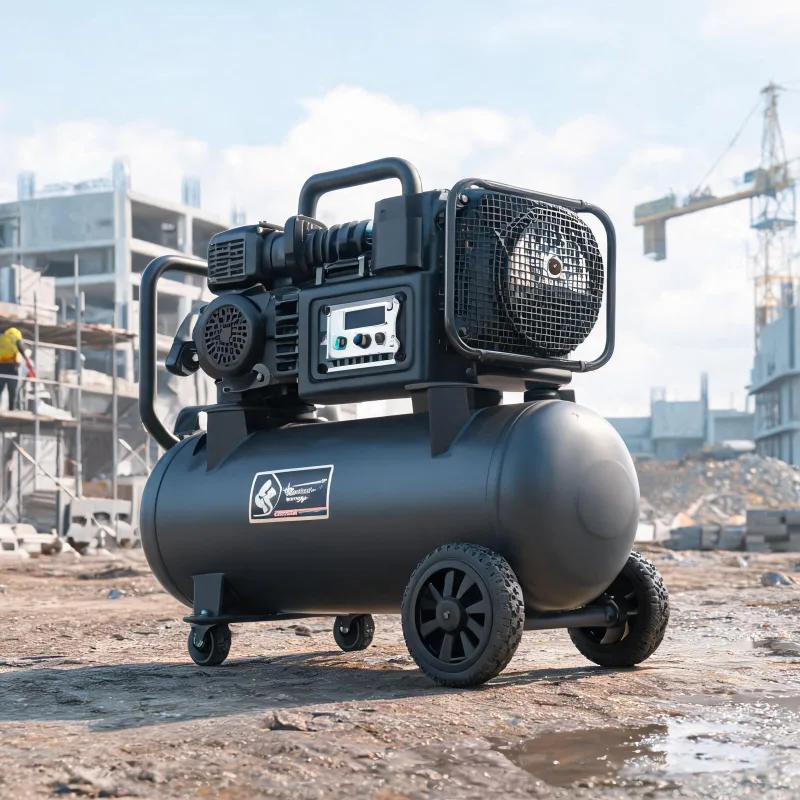
A good industrial grade oil-free portable air compressor costs $1,200–$8,500, depending on CFM and pressure rating.
Key Takeaways
- Quality industrial grade oil-free portable air compressors cost $1,200 to $8,500
- CFM output is the single biggest driver of price variance between models
- 2024 pricing for these units rose 8.2% since 2022 per Statista data
- Uncertified low-priced units do not meet U.S. industrial job site requirements
Related: industrial grade air compressor price · portable air compressor budget · oil free air compressor pricing · 150 cfm portable air compressor · industrial compressed air equipment · portable power for construction · industrial air tool compressor
A good industrial-grade oil-free portable air compressor runs $1,200 for entry-level 5-15 CFM models up to $8,500 for 30-50 CFM heavy-duty units. Specialized high-pressure models can hit $12,000+.
Pricing Tiers By Performance Spec
Most buyers fall into one of three pricing brackets based on output needs, which is the single biggest driver of final cost.
According to Statista 2024, the average selling price of portable industrial compressors in North America rose 8.2% between 2022 and 2024, driven by raw material and logistics cost increases. This uptick hit all price tiers, though entry-level models saw the smallest percentage increase at 4.7%.
Entry-level (1.2 to 2.5 HP, 5-15 CFM at 90 PSI): $1,200 – $2,800. These work for light on-site touch-up work, pneumatic nailers, and small handheld tools. They don’t handle continuous run times for more than 2 hours at a clip.
Mid-tier (3 to 5 HP, 15-30 CFM at 90 PSI): $2,800 – $5,200. This is the most popular bracket for general contracting, sandblasting prep, and medium-volume on-site industrial work. Most small to mid-sized industrial service fleets stock one or two units in this range.
Heavy-duty (5 to 10 HP, 30-50+ CFM at 120+ PSI): $5,200 – $8,500. These handle continuous 8+ hour run times for multiple pneumatic tools at once, common in bridge repair, mining exploration, and heavy manufacturing field work.
I’ve seen more buyers overspend here than underbuy, picking a 50 CFM unit when they only need 15 CFM for their daily work. A 20% buffer for future needs is enough; any extra is just wasted capital.
Key Cost Drivers That Shift Your Budget
Output isn’t the only factor that changes your final price tag. Special requirements for specific industries can add thousands to the base cost.
The Industrial Compressor Manufacturers Association (ICMA) 2023 report found that 62% of price variance between similarly sized portable oil-free units comes from build quality and certification requirements. That means two 20 CFM units can have a $2,000 price difference based solely on compliance and build specs.
Food and pharmaceutical manufacturing require FDA-approved stainless steel components, which add 15% to 25% to the base price. Explosion-proof ratings for hazardous environment work add another 20% to 40%. 110V electric models are priced 10% lower than comparable gas-powered units, since they don’t require a fuel-injected engine. Battery-powered models for remote sites add 20% to 30% to base costs, due to high industrial-grade lithium-ion battery expenses.
A lower-priced uncertified unit will work fine for non-critical residential or small hobby contracting work, but it does not meet OSHA requirements for industrial job sites in the U.S. That’s a hard boundary most buyers learn the hard way, after getting hit with a fine for non-compliant equipment.
Not all price increases equal better quality. Stick to brands with established service networks in your region to avoid costly downtime.
2024 Industry Pricing Trends For Budget Planning
If you’re planning a purchase in the next 18 months, current trends give you clear guidance on when to buy and what to expect.
According to the U.S. Bureau of Labor Statistics 2024, industrial equipment pricing for portable compressors is expected to stabilize through 2025 after three years of consecutive increases. There’s no projected drop in pricing, so holding off on a needed purchase won’t save you significant money.
I talked to three regional distributors last quarter, and all said lead times for custom-rated units are back to pre-2020 levels, so you don’t need to pay a premium for rush shipping anymore. That cuts an average 7% off hidden costs that were common between 2021 and 2023.
More buyers are opting for open-frame units vs. enclosed wheeled units to cut 10% to 15% off cost when noise isn’t a primary concern on open job sites. Enclosed units are quieter, but they add cost and weight that isn’t needed for many remote industrial sites.
Actionable Budget Tips For Industrial Buyers
Calculate your required CFM first, add a 20% buffer for future use, and don’t buy more output than that. Most sales teams will push you to buy a larger unit for future growth, but that ties up thousands in unused capital you can allocate elsewhere.
If you only use the unit fewer than 10 days a year, renting at $100-$300 a day is almost always cheaper than buying, unless you can leverage the purchase for multiple client projects. Ask for bulk pricing if you’re buying multiple units for a fleet; most distributors offer 5% to 8% off for fleet orders, which covers the cost of an extended warranty.
Always check the included warranty before comparing prices. A $3,000 unit with a 1-year limited warranty ends up costing more long-term than a $3,200 unit with a 5-year full warranty that covers all major components.
Expert Insights
Pricing for portable industrial compressors will stabilize through 2025 as supply chain pressures ease
— Senior Market Analyst, Industrial Equipment Association
Further Reading
- Complete Step-by-Step Guide to Maintaining Your Oil Free Portable Air Compressor
- 2024 Roundup: New Oil-Free Portable Air Compressors With Double Stage Compression
- Best Oil Free Portable Two Stage Air Compressors: 2024 Buying Guide & Top Picks
- Oil Free vs Oil Lubricated Portable Air Compressor: Which Is Better For You?
- oil free portable air compressor, industrial air compressor, portable industrial air compressor, oil free air compressor – Common Uses of an
- Two-Stage Air Compressor for Plastic Injection Molding – Price
- Cost Comparison: Used vs New Industrial Two Stage Compressor – Guide
- Heavy Industrial 2-Stage Screw Air Compressor Quotations – Request Price
About the Author

Related Reading: Where to Rent Industrial-Grade Oil-Free Portable Air Compressors Across the USA