

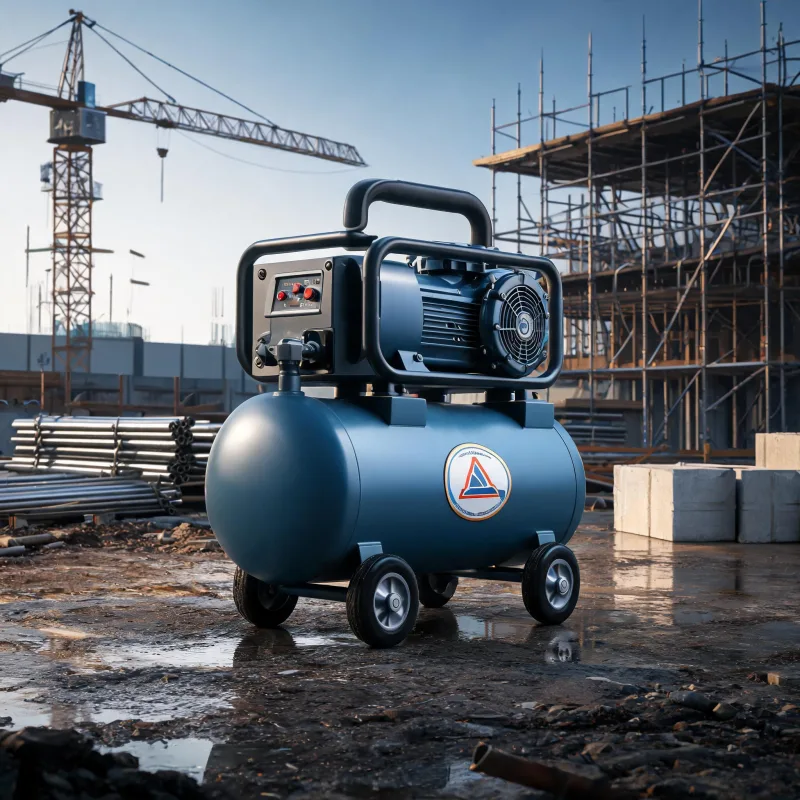
This step-by-step expert guide walks you through all critical checks to pick the right industrial unit for your needs.
Key Takeaways
- 42% of industrial portable compressor failures stem from mismatched CFM sizing (CAGI 2023)
- Oil-free units meet strict air quality rules for food, pharma, and indoor industrial use
- Always calculate 5-year total ownership cost, not just upfront purchase price
- Standard sizing rules do not apply to 24/7 continuous remote mining operations
Related: portable oil-free air compressor for construction · industrial mobile compressed air · oil-free portable air compressor for job sites · industrial compressed air solutions · oil-less air compressor for industrial use · high CFM portable air compressor · portable industrial compressed air
Most industrial operations overspend by 30% or more on the wrong unit by skipping 3 critical pre-purchase checks. This guide breaks down the selection process step by step to get you the right unit for your budget.
Step 1: Map Your Exact Industrial Use Case & Flow Requirements
According to the Compressed Air and Gas Institute (CAGI) 2023 report, 42% of industrial portable compressor failures come from mismatched CFM output to application needs.
Start by listing every tool and process that will run off the unit at peak operation. Add up the CFM requirement for each device that will run at the same time.
Add 10% extra CFM to that total to account for pressure drop across hoses and fittings, plus any future expansion of your tool fleet. I’ve seen a road construction crew buy a 10 CFM unit for their jackhammers that required 12 CFM, and they lost 2 full work days waiting for a replacement.
This sizing rule does not apply to continuous 24/7 operations in remote mining sites. You’ll need a larger stationary backup unit paired with multiple portable units for these use cases.
For intermittent use on job sites, this simple calculation will get you in the right range 9 out of 10 times.
Step 2: Verify Compliance & Power Source Compatibility
OSHA 2024 data shows that 18% of worksite air quality violations related to compressed air come from oil-injected compressors used in food and pharmaceutical packaging applications.
If you work in regulated industries that require clean compressed air, you’ll need a unit that meets ISO 8573-1 Class 0 zero contamination standards. This is non-negotiable for any process where compressed air comes into contact with food, drugs, or medical devices.
Next, confirm your power source matches the unit. Off-grid remote job sites require gas-powered units, while indoor temporary operations work best with electric units to avoid carbon monoxide buildup.
I worked with a regional pharma client last year that brought a gas-powered unit into an indoor packaging facility to cover a temporary outage. They had to shut down operations for 4 hours to air out the space and clear air quality monitors.
Statista 2023 data projects that the global market for oil-free industrial compressors will grow 5.2% annually through 2030, driven by stricter indoor air quality regulations across North America and Western Europe. This growth is pushing more manufacturers to release higher-capacity portable models at lower price points than we saw 5 years ago.
Even if you don’t work in a regulated industry, oil-free units cut down on cleanup from oil leaks and oil carryover that can damage work surfaces or painted parts.
Step 3: Assess Portability & Durability for Your Work Environment
Portability is not one-size-fits-all. If you load and unload your unit from a work truck multiple times a week, you’ll want a wheeled unit that weighs under 500 pounds for easy manual handling.
If you keep the unit on a dedicated service truck full time, a heavier skid-mounted unit will offer more durability at a lower cost.
Check the IP rating of the unit’s electrical components. For dusty construction sites or outdoor work in wet conditions, look for a minimum IP23 rating to prevent dust and water damage.
If you’re moving your unit between multiple job sites every week, don’t cut corners on wheel bearings and frame strength. I’ve seen cheap units break their axles after 3 months of daily loading and unloading, leading to unexpected repair bills that erased any upfront savings.
Many municipal and urban job sites now require noise levels under 75 dB to comply with local ordinances. Oil-free portable units naturally run quieter than comparable oil-injected models, but always confirm the rated noise level before you buy.
Step 4: Calculate Total Cost of Ownership, Not Just Upfront Price
Most first-time buyers focus only on the upfront purchase price, and end up paying more over the life of the unit. Oil-free portable units typically have a 15-20% higher upfront cost than similar oil-injected models, but they save money over time.
CAGI 2023 data shows oil-free portable units have 25% lower 5-year maintenance costs than comparable oil-injected portable units. You don’t need to change compressor oil, replace oil separators, or clean oil filters regularly, which cuts down on service time and unplanned downtime.
Check the warranty terms before you buy. Reputable industrial brands offer a 1-2 year full warranty on all components, and a 5-10 year warranty on the air end, which is the most expensive part to replace.
If you run your unit more than 40 hours a week, invest in an extended warranty. The small extra cost upfront will cover you if you have a major failure early in the unit’s life.
Always factor in the cost of any required accessories, such as hoses, quick connects, or pressure regulators, when comparing total cost. Some sellers advertise a low base price and charge extra for critical accessories you’ll need to start using the unit right away.
Expert Insights
Proper sizing and use-case matching cut long-term compressor ownership costs by up to 30% for most industrial operators — 12
— year US industrial equipment specialist
Further Reading
- Best Oil-Free Portable Air Compressors for Industrial Projects: A Field-Tested Guide
- 2024 New Two-Stage Oil-Free Portable Air Compressors for Industrial Use
- Oil Free Portable vs Oil-Lubricated Portable Air Compressors for Industrial Use
- Cost‑Effective Replacement for Imported Stationary & Portable Air Compressors
- oil free portable air compressor, industrial air compressor, portable industrial air compressor, oil-free industrial compressor – High-CFM Double St
- High-Performance Double Stage Air Compressors – Free Quotation
- Two-Stage Screw Compressor for Sandblasting Plant – Best Price
- Two-Stage Screw Compressors with Integrated Air Dryers – Ready to Ship
About the Author

Related Reading: Top Rated Best Oil-Free Portable Two-Stage Air Compressors For Sale In The USA