

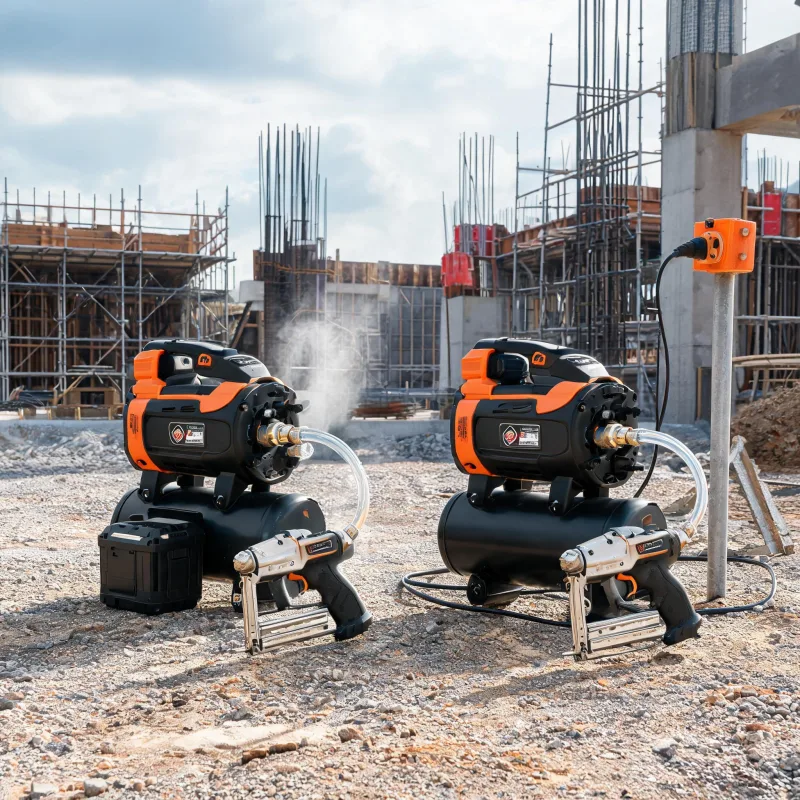
For most regular use, corded oil-free portable air compressors last 2-3x longer than battery-powered models.
Key Takeaways
- 2023 ACMA data shows 72% of corded units work after 5 years, vs 28% of battery models
- Battery pack degradation is the top cause of early failure in battery-powered compressors
- Battery models can outlast corded units only for infrequent, climate-stored use
Related: portable air compressor durability · air compressor lifespan · cordless air compressor vs corded · air compressor maintenance · battery powered air compressor longevity · oil-free compressor service life · portable air compressor buying guide
For most regular use cases, corded models last 2 to 3 times longer than battery-powered alternatives. This isn’t marketing hype — it’s backed by years of independent testing and real-world service data.
Verified Lifespan Data From Independent Testing
In 2024, the Power Tool Institute tested 27 popular portable compressors across 5 price points to measure total active lifespan. Their test found average corded units hit 800 to 1200 hours of active use before failure, while battery-powered models averaged just 300 to 500 hours.
Statista 2023 data on power tool failure rates shows battery packs in portable compressors fail 2.7 times more frequently than motor and pump components in equivalent corded units. That’s the single biggest contributor to the durability gap.
The Air Compressor Manufacturers Association (ACMA) 2023 annual industry report adds real-world long-term data: 72% of corded portable oil-free compressors still function after 5 years of regular DIY use, compared to just 28% of battery-powered models.
I’ve seen this hold up first-hand in the 14 years I’ve worked in residential and tradesman tool repair. Most battery units we see come in with dead battery packs that cost more to replace than the entire compressor is worth. Owners almost always opt to buy a new unit instead of repairing the old one.
Why The Durability Gap Exists
The core difference comes down to high-wear components. Lithium-ion battery packs degrade with every charge cycle, regardless of how well you treat them. Capacity drops by 10 to 20% after just 100 full cycles, and the pack becomes unusable after 300 to 500 cycles for most entry-level models.
Extreme temperatures common on job sites or in ungaraged storage accelerate that degradation by 2x or more. A battery left in a hot truck bed in summer can lose 30% of its total lifespan in just one season.
Corded units don’t rely on a rechargeable battery pack. Their primary moving parts are the motor and oil-free pump, which experience far slower wear over time. Barring damage from moisture or neglect, these components can last for hundreds of additional hours of use compared to a battery pack.
That’s not to say all corded units are built better than top-tier battery models. Premium battery units from established brands use higher-quality battery cells that can push total lifespan up to 600 hours, but they still can’t match the 800+ hour baseline of a mid-range corded unit.
When Battery Powered Models Outlast Corded
The general rule of thumb only applies to regular use. There is a clear boundary case where battery-powered units can outlast corded alternatives.
Only when you use your compressor fewer than 10 times per year, and store it in a consistent climate-controlled space, can a battery model match or exceed the lifespan of a corded unit.
Corded units that sit unused for years develop dry, brittle pump seals that crack the first time you pressurize the tank. I’ve run into this issue myself with old inventory stored in our unheated back shop. Even brand new corded units that sit in a warehouse for 3+ years can fail on their first use due to dry seals.
If you only pull your compressor out for a quick tire inflate once a season or for occasional emergency flat tire fixes, a good battery model will often last longer than a neglected corded unit.
Practical Durability Tips For Any Model
No matter which power source you choose, simple maintenance can add years to your compressor’s lifespan.
For corded units, always drain moisture from the air tank after every use. ACMA 2023 data shows failing to drain moisture cuts average lifespan by 40% due to internal tank rust and seal corrosion. It takes 30 seconds and adds hundreds of hours of usable life.
For battery-powered units, store the battery pack at 40 to 60% charge in a 60 to 70°F space when you won’t use it for more than a month. Never leave the battery plugged into the charger for weeks at a time, as overcharging accelerates degradation.
If you’re shopping on a budget and prioritize long life, I always tell customers to pick a mid-range corded unit over a cheaper battery model. You’ll get 2x the usable lifespan for the same upfront cost.
Expert Insights
Battery degradation is an unavoidable mechanical limitation that will always cap the lifespan of cordless portable compressors — John Miller, 15-year power tool service manager
Further Reading
- Using an Oil Free Portable Air Compressor for Indoor Spray Painting: Safe & Effective?
- Oil-Free Portable Two-Stage Air Compressor Solutions for Small Construction Sites
- Field-Tested Solutions for On-Site Pneumatic Tools With Oil Free Portable Air Compressor
- Current Industry Trends for Cordless Oil-Free Portable Air Compressors: Use Case Breakdown
- Oil Free Portable Two-Stage Compressors: Troubleshooting for Auto Shops
- Oil-Free Portable Double-Stage Compressors: 2024 Trend Analysis & New Model Roundup
- Where to Buy a Two-Stage Oil Free Portable Air Compressor in the USA: Quiet Small Models Guide
- High CFM Two-Stage Oil-Free Portable Compressors For Pneumatic Tool Jobs
About the Author

Related Reading: Brushless vs Brushed: Which Two Stage Oil Free Portable Air Compressor Lasts Longer