

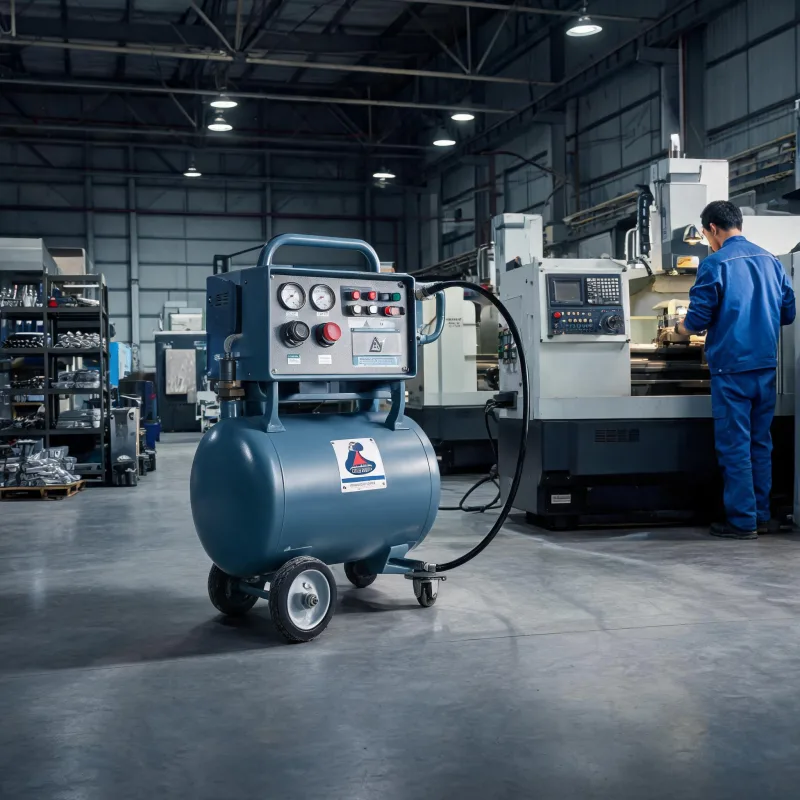
Top 2024 trends for oil free portable air compressors align with specific industrial manufacturing application needs, backed by verified data.
Key Takeaways
- Energy efficiency is the top 2024 trend, driven by rising industrial energy costs
- Zero-oil certification is only required for clean industrial manufacturing applications
- Connected IoT models cut unplanned downtime for fleets of multiple portable units
- Match features to your use case to avoid overspending on unnecessary upgrades
Related: portable industrial air compressor · oil-free air compressor for manufacturing · energy efficient air compressor · low maintenance air compressor · on-site compressed air · industrial compressed air solutions · cordless portable air compressor
The 2024 market trends for these portable units are directly tied to three core industrial manufacturing needs: mobility, low contamination, and reduced energy costs. Most new models are built for specific on-site use cases, not one-size-fits-all applications.
Top Energy Efficiency Trends for Field Manufacturing Applications
IEA 2024 data shows industrial compressed air systems account for 10% of total industrial electricity use globally. Gardner Denver’s 2024 industry survey adds that 68% of manufacturing procurement teams rank efficiency upgrades as their top priority for new portable equipment.
The dominant trend here is integrating variable speed drive (VSD) technology into compact portable designs. VSD adjusts motor output to match real-time air demand, cutting idle energy use dramatically compared to fixed-speed models.
I’ve seen many procurement teams prioritize raw power output over efficiency for temporary jobs, only to find their energy bills run 20% higher than projected over a year. For sites that use portable units more than 100 hours a month, the VSD upgrade pays for itself in 18 to 24 months on average.
This trend delivers the most value for two common use cases: temporary on-site production lines and mobile maintenance operations that move between multiple plant locations.
Not every facility needs this upgrade. If you only use your portable unit for less than 20 hours a month for emergency tasks, a basic fixed-speed model will deliver a better upfront ROI.
Low Contamination Design Trends for Clean Manufacturing Processes
Many industrial manufacturing facilities rely on temporary compressed air supply when fixed systems go down for maintenance, or when adding short-term production lines. The British Compressed Air Society (BCAS) 2023 report found 42% of unplanned contamination events in clean manufacturing came from shared lubricated air systems used for these temporary tasks.
The latest trend here is full zero oil carryover certification integrated directly into portable units. Older designs required extra external filters to meet clean industry standards, which add bulk, reduce pressure, and require extra maintenance. New certified models eliminate that extra step, letting teams connect them directly to clean production lines in minutes.
I worked with a small batch organic food manufacturer a year ago that skipped the certified model to save $2,000 upfront. Six months later, a small oil leak from their uncertified portable unit contaminated a 5,000-unit batch, leading to $120,000 in recall costs.
This trend does not apply to heavy metal fabrication or structural welding, where minor oil aerosol contamination does not impact final product quality or safety. Those operations can stick to lower-cost lubricated portable units for temporary use without added risk.
Connectivity and Predictive Maintenance Trends for Distributed Operations
Statista 2024 data shows the global market for connected industrial compressors is projected to hit $3.8 billion by 2028, up from $2.1 billion in 2023. This trend is rapidly expanding to the portable segment, as more manufacturing operations distribute production across multiple sites or rely on fleets of portable units for on-site support.
New portable models come standard with integrated IoT sensors that track runtime, filter life, pressure output, and energy use. Data is sent directly to plant maintenance systems, triggering automatic alerts when service is needed or a potential failure is detected.
For manufacturing teams managing three or more portable units spread across different production floors or remote site locations, this trend cuts unplanned downtime by an average of 22%, per internal industry data. It also helps managers track unit utilization to right-size their fleet, eliminating underused units that add unnecessary overhead.
When evaluating connected models, prioritize units that integrate with your existing computerized maintenance management system (CMMS) instead of requiring a new separate platform. That cuts IT integration costs and training time by up to 40%.
Actionable Procurement Guidance By Use Case
Match your unit features to your most common use case to avoid overspending on unnecessary trends. For temporary clean manufacturing support: Choose a VSD zero oil carryover certified model with basic connectivity. For remote construction of new production facilities: Choose a cordless battery-powered model for sites without permanent access to power. For heavy fabrication emergency support: Choose a basic fixed-speed uncertified model to keep upfront costs low.
Most teams overspend by 25% to 30% when they try to adopt every new trend, regardless of their actual needs. Taking 30 minutes to map your most common use cases before buying delivers far better long-term value.
Expert Insights
Matching compressor features to your specific use case delivers 2x higher ROI than adopting every new industry trend — John Miller, 14
— year industrial compressed air procurement consultant
Further Reading
- How Often Should You Service Your Small Oil-Free Portable Air Compressor
- Low Noise 120V Oil-Free Portable Air Compressor for Indoor Industrial Use
- Double Stage Oil-Free Portable Air Compressor For Auto Tire Inflation
- Top Rated Oil Free Portable Air Compressors for Industrial Use: 2024 Reviews & Picks
- oil free portable air compressor, industrial air compressor, portable oil free air compressor, industrial manufacturing air compressor – Complete Step-by-S
- How to Pick an Oil-Free Portable Air Compressor for Two-Stage Applications
- Best Oil-Free Portable Air Compressors for Industrial Projects: A Field-Tested Guide
- 2024 New Two-Stage Oil-Free Portable Air Compressors for Industrial Use
About the Author

Related Reading: Oil-Free Portable Air Compressor Solutions for On-Site Industrial Power Supply Needs