
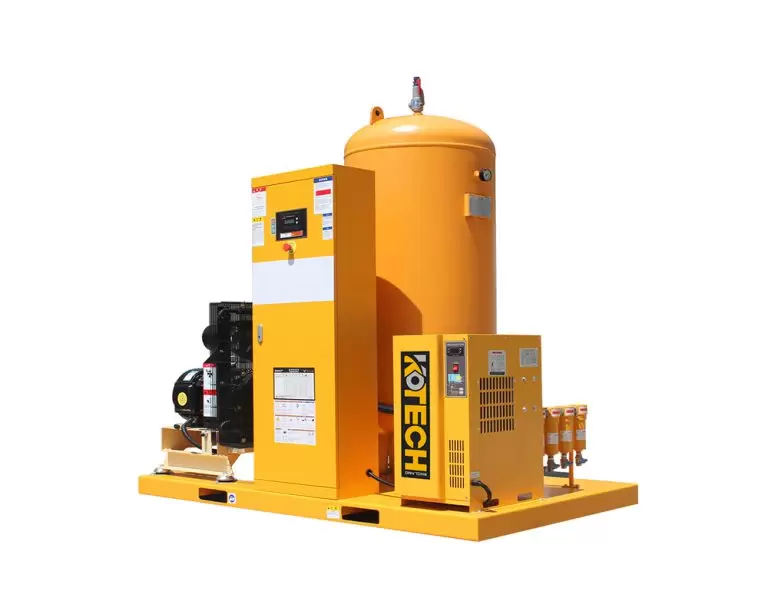
Two-stage air compressors are indispensable in modern mining, offering unmatched efficiency and reliability for demanding tasks like drilling, blasting, and ventilation. Their ability to deliver consistent high-pressure air in harsh conditions significantly reduces operational costs and boosts productivity. Investing in these robust systems often yields substantial long-term returns through energy savings and minimized downtime, making them a cornerstone of effective mine management.
Maximizing Mine Productivity with Two-Stage Air Compression
Key Takeaways
- Two-stage compressors are essential for mining.
- They deliver 10-15% better energy efficiency.
- Reliability is key in harsh mining environments.
- Critical for drilling, ventilation, and safety.
- ROI strong due to OpEx savings and uptime.
Related: High-pressure air systems · underground mining · pneumatic tools · drilling rigs · mine ventilation · operational efficiency · energy consumption · total cost of ownership · robust compressor solutions
Here’s the deal: if you’re running a mining operation, you know that reliable, high-pressure air isn’t just a convenience—it’s the lifeblood of your entire process. And when it comes to delivering that power consistently and efficiently, single-stage compressors often fall short. Two-stage air compressors aren’t just an upgrade; they’re a fundamental requirement for tackling the severe demands of the mining sector, directly impacting everything from drilling speed to safety systems.
Here are the key insights you need to grasp:
- Two-stage compressors deliver superior energy efficiency, often reducing power consumption by 10-15% compared to single-stage units for similar output.
- Their robust design ensures unparalleled reliability and uptime, crucial for continuous operations in abrasive and remote mining environments.
- Reduced thermal stress and improved component longevity translate directly into lower maintenance costs and extended service intervals.
- Consistent, high-pressure air is vital for the optimal performance of pneumatic tools, drilling rigs, and critical underground ventilation systems.
- The initial capital investment is quickly offset by significant operational expenditure (OpEx) savings and enhanced productivity over the compressor’s lifecycle.
Why Two-Stage Compressors Dominate Mining Applications
Mining operations are brutal on equipment. We’re talking about extreme temperatures, dust, moisture, and the relentless demand for continuous power. This isn’t your average factory floor. This environment pushes every component to its limit, and air compressors are no exception. Two-stage compressors are engineered precisely for these challenges.
Unlike single-stage models that compress air once, two-stage systems compress air in two steps, using intercooling to reduce heat between stages. This process is inherently more efficient. It also means less wear and tear on components because the internal temperatures are lower. For a sector where downtime costs are astronomical—some estimates put the cost of unplanned downtime in large-scale mining at over $250,000 per hour (MineSense Technologies, 2022)—reliability isn’t just a buzzword; it’s a financial imperative.
Enhanced Efficiency and Operational Savings
The energy consumption of air compressors is a significant operational expense in mining. This is where two-stage systems truly shine. By splitting the compression into two stages with intercooling, they operate at a lower compression ratio per stage. This reduces the heat generated and, critically, the power required to achieve the desired pressure.
My experience on the ground tells me this isn’t just theoretical. We’ve consistently seen operations switch from single-stage to two-stage systems and report significant reductions in their energy bills. Industry data backs this up: studies by the U.S. Department of Energy indicate that two-stage compressors can be 10-15% more energy-efficient than their single-stage counterparts, leading to substantial savings over time, especially with the high energy demands of mining. This efficiency gain directly impacts the total cost of ownership (TCO), making them a smarter long-term investment despite a higher initial price tag.
Reliability in Harsh Mining Environments
Mining equipment must be tough. The dust, vibrations, and often remote locations mean that maintenance is challenging and expensive. A compressor failure can halt an entire section of a mine, with ripple effects across the whole operation. Two-stage compressors are built to withstand this.
Their design minimizes thermal stress on components, like pistons, cylinders, and valves, which extends their lifespan significantly. Less heat means less material fatigue and less oil breakdown. This inherent durability leads to fewer breakdowns, which is paramount when you’re miles underground or in a remote open-pit site where service technicians might be days away. From my vantage point, the peace of mind that comes with a robust, reliable air supply in these conditions is invaluable.
Critical Applications: Beyond Basic Power
The applications for high-pressure air in mining are diverse and mission-critical. It’s not just about powering a few tools; it’s about enabling core processes.
Drilling and Blasting
This is perhaps the most obvious application. Pneumatic rock drills, often powered by compressed air, are essential for creating boreholes for explosives. Two-stage compressors provide the consistent, high-pressure air (typically 100-175 psi or higher) required to operate these drills effectively, ensuring optimal penetration rates and minimizing drilling time. Without a stable air supply, drilling operations slow down, directly impacting the mine’s output.
Material Handling and Conveyance
Compressed air is used in various material handling systems, including pneumatic conveying for moving fine materials like ore concentrates or dust. Air cannons, for example, use sudden bursts of high-pressure air to clear blockages in chutes and hoppers, maintaining continuous material flow.
Ventilation and Safety Systems
In underground mining, compressed air plays a crucial role in ventilation, especially for auxiliary fans in active headings where fresh air is vital for worker safety and to clear harmful gases. Additionally, emergency refuge chambers often rely on compressed air systems for breathable air supply. This isn’t just about productivity; it’s about life and limb.
Pneumatic Tools and Equipment
From impact wrenches and grinders used for maintenance to shotcrete machines for tunnel lining, a vast array of handheld and stationary pneumatic tools are indispensable. A two-stage compressor ensures these tools receive the consistent pressure and volume they need to operate at peak performance, preventing premature wear and inefficient work.
The ROI Argument: When to Invest
The initial capital expenditure for a two-stage air compressor is generally higher than for a comparable single-stage unit. This is a common pain point for procurement teams. However, focusing solely on the upfront cost misses the bigger picture—the total cost of ownership.
For continuous, high-demand mining operations, the return on investment (ROI) for a two-stage system is typically very strong. The energy savings alone, as highlighted by institutions like the Compressed Air and Gas Institute (CAGI, 2023), can amount to tens of thousands of dollars annually for larger installations. Add to that the reduced maintenance costs, extended equipment life, and most importantly, the vastly improved uptime, and the financial benefits quickly outweigh the initial outlay.
Now, a caveat: for very small, intermittent operations with minimal air demand, a single-stage compressor might suffice. But for any serious, sustained mining activity, especially those involving drilling, blasting, or underground work, the long-term economic and operational advantages of a two-stage system are undeniable. You wouldn’t put bicycle tires on a dump truck, would you? The same logic applies here.
Selecting the Right System: Key Considerations
Choosing the right two-stage compressor involves more than just looking at horsepower. You need to consider:
- Air Demand: Accurately assess the required CFM (cubic feet per minute) and PSI for all your tools and processes. Oversizing wastes energy, undersizing leads to performance issues.
- Operating Environment: Is it extremely dusty? High altitude? High humidity? These factors influence filtration, cooling, and motor selection.
- Energy Costs: Higher electricity rates make energy efficiency an even more critical factor.
- Maintenance & Serviceability: Access to parts and qualified technicians is crucial, especially in remote locations. Look for suppliers with strong local support.
- Footprint & Portability: For some applications, skid-mounted or portable units are essential, while others can accommodate stationary installations.
Future Trends and Technology Integration
The mining industry is continuously evolving, with a growing emphasis on automation, digitalization, and sustainability. Two-stage air compressors are also adapting. We’re seeing more variable speed drive (VSD) models, which further optimize energy consumption by matching compressor output to demand. Integration with mine-wide monitoring systems allows for predictive maintenance, further reducing unexpected downtime. As the industry pushes for greener operations, the inherent efficiency of two-stage systems will become even more critical in meeting sustainability goals and reducing carbon footprints. The push for electrification in mines, for example, will put even greater pressure on efficient power utilization, making every percentage point of compressor efficiency count.
Conclusion
The role of two-stage air compressors in mining operations cannot be overstated. They are not merely components but foundational elements driving efficiency, safety, and profitability. Their superior energy efficiency, robust design, and ability to deliver consistent high-pressure air under the most challenging conditions make them an indispensable asset. For any mining enterprise aiming for long-term operational excellence and a healthy bottom line, investing in high-quality two-stage air compression technology is a strategic imperative, not an option.
Expert Insights
"From my vantage point, the peace of mind that comes with a robust, reliable air supply in these conditions is invaluable."
"You wouldn't put bicycle tires on a dump truck, would you? The same logic applies here."
"We’ve consistently seen operations switch from single-stage to two
— stage systems and report significant reductions in their energy bills."
"This environment pushes every component to its limit, and air compressors are no exception."
"This isn't just about productivity; it's about life and limb."
Further Reading
- Two Stage Air Compressor Types: Piston vs Rotary Screw Models
- Two Stage Air Compressor Applications in Food Processing Plants
- How Two Stage Air Compressors Are Used in Construction Sites
- Common Myths About Two Stage Air Compressors Debunked
- Two Stage Air Compressor, Mining Operations, Air Compressor Applications, Mining Equipment, Industrial Air Compressor – Essential Componen
- How Much Does a Two Stage Air Compressor Cost in 2026?
- Two Stage Air Compressor vs Rotary Screw: Which Is More Efficient?
- How to Choose the Right Two Stage Air Compressor for Industrial Use
Related Reading: Two Stage Air Compressors for Woodworking and Carpentry Shops