
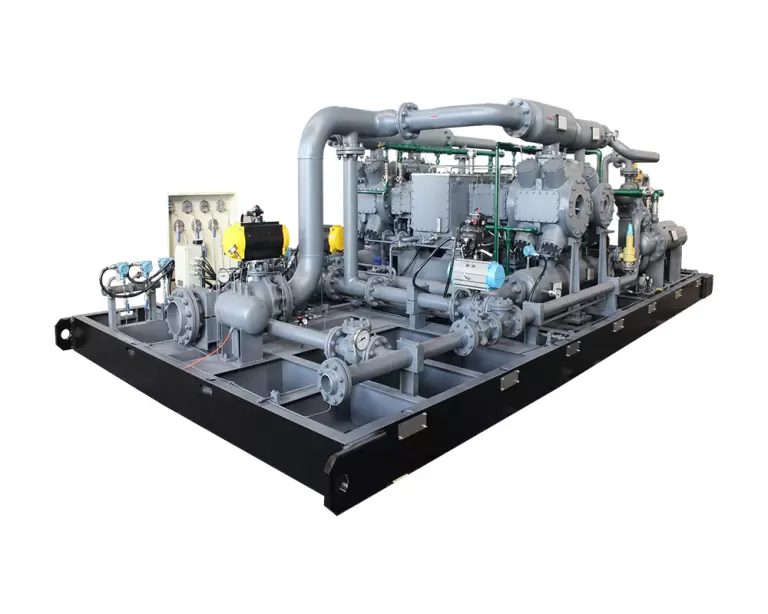
For plant operations, single-stage compressors suit intermittent, lower-pressure tasks (under 100 PSI). Two-stage units are ideal for continuous, high-pressure demands (150-175 PSI), offering superior efficiency and durability. Your choice hinges on duty cycle, required pressure, and long-term operating costs.
Precision Power: Choosing Your Plant's Optimal Air Compressor
Related: Air compressor efficiency · Industrial compressed air · Compressor buying guide · Plant air systems · PSI and CFM for compressors
Choosing an air compressor isn’t just about horsepower; it’s about matching technology to your plant’s exact needs. Get it wrong, and you’ll bleed money on energy or face constant downtime. Single-stage units are simpler and cheaper upfront, best for light, intermittent work. Two-stage compressors deliver sustained, high-pressure air efficiently for heavy industrial use.
Understanding the Core Differences
Single-Stage Compressors: Simplicity and Speed
Single-stage compressors use one piston stroke to compress air to its final pressure. They are mechanically straightforward, making them cost-effective for initial purchase. Typically, these units deliver up to 100 PSI.
They are ideal for tasks like operating impact wrenches occasionally or inflating tires in a small vehicle bay. Duty cycles are often limited, meaning they need rest periods to prevent overheating. Don’t push them for continuous, high-demand applications.
Two-Stage Compressors: Power and Efficiency
Two-stage compressors compress air twice. First, a larger piston compresses air to an intermediate pressure, then an intercooler reduces its temperature. Finally, a smaller piston compresses it to the final, higher pressure, often 150-175 PSI.
This two-step process, with intercooling, significantly improves efficiency and reduces heat buildup. The result is cooler, drier air, higher pressure, and a much longer operational life for continuous industrial demands.
Key Performance Metrics for Your Plant
Pressure (PSI) & Volume (CFM): Matching Demand
Your plant’s required pressure (PSI) and air volume (CFM) are non-negotiable. Single-stage compressors typically max out around 100-125 PSI. If your tools or processes demand 150-175 PSI, a two-stage unit is essential.
Estimate your total CFM by summing all air-powered equipment and applying a diversity factor. Over-sizing wastes energy; under-sizing leads to pressure drops and productivity losses. Get these numbers right.
Efficiency & Energy Costs: The Long-Term View
Two-stage compressors are inherently more energy-efficient for higher pressures and continuous operation. Due to intercooling, they achieve higher compression ratios with less power. The U.S. Department of Energy (2017) notes that optimized two-stage systems can be 10-15% more energy-efficient than single-stage for continuous high-pressure applications.
This efficiency translates directly to lower electricity bills. For a plant running 24/7, even a small percentage gain can mean thousands of dollars saved annually. Initial capital outlay for a two-stage unit often pays for itself quickly through energy savings.
Heat Management & Air Quality
Heat is the enemy of compressor longevity and air quality. Single-stage units run hotter, leading to more moisture in the compressed air and increased wear. This demands more robust air treatment downstream.
Two-stage units, with their intercoolers, run significantly cooler. This reduces thermal stress on components and produces drier, higher-quality air, minimizing issues with pneumatic tools and processes sensitive to moisture.
Application-Specific Selection Guide
When to Choose Single-Stage
Opt for a single-stage compressor if your plant’s air demands are intermittent and low-pressure. Think small fabrication shops, light automotive repair, or powering a few occasional hand tools.
If your total run time is less than 50% of the workday, and no single tool requires sustained high pressure, a single-stage unit offers a cost-effective solution. Don’t expect continuous high output.
When to Choose Two-Stage
Choose a two-stage compressor for continuous, heavy-duty industrial applications. This includes powering CNC machinery, large-scale manufacturing lines, sandblasting, or any process demanding consistent high pressure and volume.
If your plant operates multiple shifts, or if air is critical to your core production, a two-stage unit is the only viable option. Their durability and efficiency are built for the long haul.
Cost Implications & ROI
Initial Investment
Single-stage compressors are generally 20-40% cheaper to purchase than comparable two-stage models. This lower upfront cost can be tempting, especially for smaller budgets or intermittent use cases.
However, this initial saving can be quickly eroded by higher operating costs and shorter lifespan if the compressor is misapplied to a continuous, high-pressure demand environment.
Long-Term Operating Costs
The true cost of a compressor is measured over its lifetime. For a system running 4000 hours/year at 125 PSI, upgrading from an inefficient single-stage to an optimized two-stage unit could yield $1,500-$3,000 in annual electricity savings for a 25HP unit, according to Compressed Air & Gas Institute (CAGI) guidelines (2019).
Factoring in energy, maintenance, and potential downtime, two-stage compressors often deliver a superior return on investment for industrial settings. Energy costs typically account for 70-80% of a compressor’s total lifecycle cost.
Maintenance & Longevity
Durability and Service Life
Due to cooler operation and robust design, two-stage compressors generally offer significantly longer service life. Ingersoll Rand Technical White Paper (2020) suggests two-stage units can exhibit 20-30% longer service intervals for critical components under heavy-duty cycles.
This translates to less frequent maintenance, fewer repairs, and reduced downtime for your plant. These units are built to withstand the rigors of continuous industrial use.
Routine Maintenance
Regardless of type, regular maintenance is crucial. This includes oil changes, filter replacements, and checking for leaks. A well-maintained single-stage unit will outperform a neglected two-stage unit.
From my 12 years in this field, I’ve seen countless plants over-spec or under-spec their systems, only to neglect basic maintenance. Proper care is paramount for any compressor’s efficiency and lifespan.
Practical Steps for Your Decision
1. Audit Your Air Needs: Document every air-powered tool and process. Note required PSI, CFM, and daily run time (duty cycle). Be precise. 2. Calculate Total Demand: Sum up the peak CFM requirement, adding a safety margin (e.g., 10-15%). Determine if your demand is intermittent or continuous. 3. Project Energy Costs: Based on your local electricity rates and estimated run hours, calculate potential operating costs for both compressor types. Consider efficiency ratings. 4. Factor in Future Growth: Will your plant expand? Will new processes require more air or higher pressure? Build in scalability to avoid premature replacement. 5. Consult a Specialist: Engage reputable compressor distributors. Provide your detailed audit. They can offer specific sizing recommendations and ROI calculations tailored to your plant.
Ultimately, while a single-stage unit might be tempting for its lower initial cost, a two-stage compressor nearly always proves more economical and reliable for continuous industrial operations. Your plant’s productivity depends on getting this right.
Further Reading
- How to choose the right CFM for a 2-stage screw compressor?
- Top 10 High-Pressure Two-Stage Compressors for Mining in 2026.
- How Portable Diesel Air Compressor Suppliers Are Reshaping Heavy Industry and Construction Efficiency
- How the Air Compressor Trailer Drives On-Site Construction Efficiency
- Single Stage Air Compressor, Two Stage Air Compressor, Plant Air Compressor, Industrial Compressor Selection – The Logic Behind O
- The Strategic Logic Behind Air Compressor Supplier Selection A Structural Analysis
- How Air Tools Drive Unprecedented Efficiency in Industrial Operations
- The Logic Behind Air Compressors for Air Impact Wrenches A Structural Analysis
Related Reading: Why Sandblasting requires stable 175 PSI from a two-stage unit.