
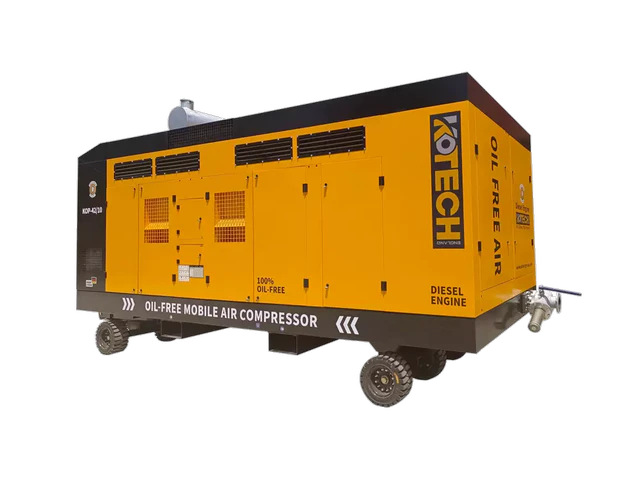
Choosing the right two-stage air compressor – piston or rotary screw – hinges on your specific operational needs, budget, and long-term efficiency goals. While piston models offer lower initial costs for intermittent use, rotary screw compressors excel in continuous, high-demand environments, delivering superior energy efficiency and quieter operation, often leading to a lower total cost of ownership despite a higher upfront investment. Understanding your duty cycle and air quality requirements is paramount for making an informed decision.
Piston vs. Rotary Screw: The Ultimate Two-Stage Compressor Showdown
Key Takeaways
- Piston compressors suit intermittent, lower-volume air needs.
- Rotary screw compressors excel in continuous, high-volume industrial applications.
- Total Cost of Ownership (TCO) is crucial, with energy as the largest factor.
- Rotary screws offer better energy efficiency and quieter operation for heavy use.
- Piston models have lower initial costs but higher noise and limited duty cycles.
- Assess your CFM demand and duty cycle for the best choice.
Related: reciprocating air compressor · screw air compressor · compressed air system efficiency · total cost of ownership (TCO) · CFM requirements · duty cycle · maintenance considerations · variable speed drive (VSD) compressors · fixed speed compressors · air power solutions · manufacturing compressed air · automotive shop compressors
When it comes to two-stage air compressors, the choice between piston and rotary screw models isn’t just about brand preference; it’s a critical business decision impacting your bottom line, productivity, and operational efficiency for years. As someone who’s been knee-deep in compressed air solutions for over a decade, I’ve seen countless businesses struggle with this exact dilemma. My goal here is to cut through the marketing noise and give you the actionable insights you need.
Here are the key insights to get you started:
- Rotary screw compressors are the undisputed champions for continuous, heavy-duty industrial applications, especially where energy efficiency is paramount.
- Piston compressors offer a cost-effective solution for intermittent, lower-volume air demands, ideal for smaller shops or backup systems.
- Total Cost of Ownership (TCO) often favors rotary screws for high-usage scenarios, despite their higher initial price tag.
- Noise levels and maintenance requirements differ significantly, impacting workplace environment and operational uptime.
- Understanding your true CFM demand and duty cycle is the single most important factor in making the right choice.
Let’s dive into the specifics.
Piston Compressors: The Robust, Budget-Friendly Option for Intermittent Work
Two-stage piston compressors, also known as reciprocating compressors, have been the backbone of many workshops and smaller manufacturing operations for decades. They work by using pistons to compress air in two stages, reaching higher pressures more efficiently than single-stage models.
Why Piston Models Still Matter (and Where They Shine)
The primary appeal of a two-stage piston compressor is its lower upfront cost. For businesses with tighter budgets or those just starting out, this can be a significant advantage. They’re also relatively straightforward machines, which translates to simpler maintenance procedures that often don’t require specialized technicians. This can save you a fair bit on service contracts.
Piston compressors truly excel in intermittent use applications. Think auto repair shops, small fabrication facilities, or woodworking shops where air tools are used periodically throughout the day, followed by periods of downtime. Their design allows them to start and stop frequently without undue wear, making them perfect for situations where you need a burst of air, then a break.
They’re also quite robust. These units are built to last, often with cast iron components, and can withstand demanding environments. For operations needing 5-30 CFM and pressures up to 175 PSI, a well-maintained piston compressor can be a reliable workhorse.
The Downside: When Piston Compressors Fall Short
However, piston compressors come with their own set of drawbacks. Their biggest Achilles’ heel is noise. They are inherently louder than rotary screw compressors, which can be a real issue in populated work environments or if you need to comply with specific noise regulations. I’ve seen shops where the compressor literally drowns out conversations, impacting communication and worker comfort.
Another major limitation is their duty cycle. While they handle intermittent use well, running a piston compressor continuously for extended periods (e.g., more than 70% of the time) can lead to excessive heat buildup and premature wear. This significantly shortens their lifespan and increases maintenance frequency. They are also generally less energy-efficient for continuous, high-volume demands compared to rotary screws, meaning higher electricity bills over time.
Rotary Screw Compressors: The Powerhouse for Continuous Industrial Demands
Rotary screw compressors are the modern standard for industrial and commercial applications requiring a continuous, reliable, and high-volume supply of compressed air. They operate by using two meshing helical screws (rotors) to trap and compress air, delivering a smooth, pulsation-free airflow.
Where Rotary Screws Dominate the Market
The biggest advantage of rotary screw compressors is their superior energy efficiency for continuous operation. Unlike piston compressors that cycle on and off, rotary screws are designed to run continuously, often with sophisticated controls like Variable Speed Drive (VSD) technology. VSD compressors adjust their motor speed to match air demand, leading to substantial energy savings. In fact, studies by the U.S. Department of Energy (DOE 2022) suggest that VSD compressors can reduce energy consumption by as much as 35% compared to fixed-speed models in fluctuating demand applications. This isn’t just a minor saving; it’s a game-changer for your operational costs.
They are also significantly quieter than piston compressors. This makes them ideal for facilities where noise reduction is a priority, improving worker comfort and enabling installation closer to the point of use. Their continuous operation means less wear and tear from constant starting and stopping, leading to longer lifespans and lower maintenance frequency when properly sized and maintained. For businesses needing 20-500+ CFM and continuous operation, a rotary screw compressor is often the most cost-effective long-term solution.
The Trade-offs: When to Reconsider a Rotary Screw
The primary hurdle for many businesses considering a rotary screw compressor is the higher initial investment. They are simply more expensive to buy outright than comparable piston models. This upfront cost can be a deterrent, especially for smaller operations.
While maintenance is less frequent, it can be more complex and requires specialized knowledge or technicians. Filters, oil, and separators need to be replaced on a schedule, and components are generally more intricate. Also, for truly light, intermittent use (think a few minutes of air every hour), a rotary screw might actually be less efficient than a piston unit because of the energy spent simply running the motor at minimum load. This is a common misconception I’ve encountered; bigger isn’t always better if your demand profile doesn’t warrant it.
The Real Decider: Total Cost of Ownership (TCO)
Focusing solely on the purchase price is a rookie mistake I’ve seen many businesses make. The Total Cost of Ownership (TCO) is what truly matters over the lifespan of your compressor. This includes the initial purchase price, installation costs, energy consumption, maintenance, and potential downtime.
Energy costs are by far the largest component of TCO for an air compressor. According to the Compressed Air and Gas Institute (CAGI 2023), energy can account for 70-80% of an air compressor’s total lifecycle cost. This is why the energy efficiency of rotary screw compressors, especially VSD models, can quickly offset their higher initial price tag for applications with high run times.
Let’s consider a scenario: A business running a 20 HP compressor 40 hours a week. A less efficient piston compressor might consume significantly more power than an equivalent VSD rotary screw. Over five to seven years, those energy savings from the rotary screw can easily exceed the initial price difference. When we work with clients, we always model this out; the numbers rarely lie.
Maintenance costs also play a role. While piston compressors might have cheaper individual parts, their higher maintenance frequency and potential for more frequent breakdowns in continuous use can add up. Rotary screws, with proper preventative maintenance, offer more predictable costs and higher uptime.
Beyond the Basics: Noise, Footprint, and Future-Proofing
Noise and Workplace Environment
The difference in noise levels is stark. A piston compressor can easily hit 80-90 dB, requiring hearing protection and often needing to be housed in a separate, soundproofed room. Rotary screw compressors typically operate in the 65-75 dB range, making them much more amenable to being installed closer to the production floor without disrupting workers. This can significantly improve your workplace environment and reduce compliance headaches.
Footprint and Installation
Rotary screw compressors, especially integrated package units, often have a more compact footprint for their output compared to piston models. They are also typically easier to install, often requiring only power and air lines. Piston compressors can sometimes be bulkier, and their vibrations might necessitate more robust mounting.
Future-Proofing with Technology
The industrial air compressor market is continuously evolving, with a strong emphasis on energy efficiency and smart technology. A report by Grand View Research (2024) projects significant growth in the global industrial air compressor market, driven by increasing demand for energy-efficient and connected solutions. Investing in a VSD rotary screw compressor not only saves energy today but also positions your operation for future efficiency standards and potential integration with smart factory systems.
Making the Call: When to Choose Which
The decision boils down to matching the compressor type to your specific operational profile.
- Choose a Two-Stage Piston Compressor if:
– Your air demand is intermittent (e.g., less than 70% duty cycle). – Your CFM requirements are lower (typically 5-30 CFM). – Your initial budget is tight, and you need a reliable, lower-cost entry point. – Noise is not a primary concern, or you have a dedicated compressor room. – You require simpler, more hands-on maintenance.
- Choose a Rotary Screw Compressor if:
– Your air demand is continuous or near-continuous (e.g., 80-100% duty cycle). – Your CFM requirements are higher (typically 20 CFM and up). – Energy efficiency and lower TCO over the long run are your top priorities. – Noise reduction is critical for your workplace environment. – You prioritize higher uptime and more predictable maintenance schedules. – You’re looking to future-proof your operations with advanced technology like VSD.
A quick caveat: For very specific applications, like precision instrumentation or medical air, oil-free versions of both types exist, but that’s a whole other discussion. For general industrial use, this breakdown holds true. Also, don’t overlook the importance of proper system sizing. An oversized or undersized compressor, regardless of type, will lead to inefficiency and higher costs. According to the Compressed Air Challenge (CAC 2021), optimizing compressed air systems can lead to 20-50% energy savings for many facilities. That’s a huge number.
Ultimately, there’s no one-size-fits-all answer. Evaluate your specific needs, crunch the TCO numbers, and consider how each option impacts your daily operations. A seasoned professional can help you navigate these choices, ensuring you select the optimal two-stage air compressor for your business.
Expert Insights
"Don't let the sticker price be your sole guide; the real cost of an air compressor unfolds over its lifespan, primarily through energy consumption and maintenance. Always calculate the Total Cost of Ownership."
Further Reading
- Two Stage Air Compressor Applications in Food Processing Plants
- Step-by-Step Two Stage Air Compressor Installation Guide
- How Two Stage Air Compressors Are Used in Construction Sites
- Two Stage Air Compressor Duty Cycle: What It Means for You
- two stage air compressor types, piston vs rotary screw, industrial air compressors, commercial air compressors – Common Myths About
- Guide to Two Stage Air Compressor Horsepower Selection
- Essential Components of a Two Stage Air Compressor Explained
- How Much Does a Two Stage Air Compressor Cost in 2026?
Related Reading: Two Stage Air Compressor Applications in Textile Manufacturing