
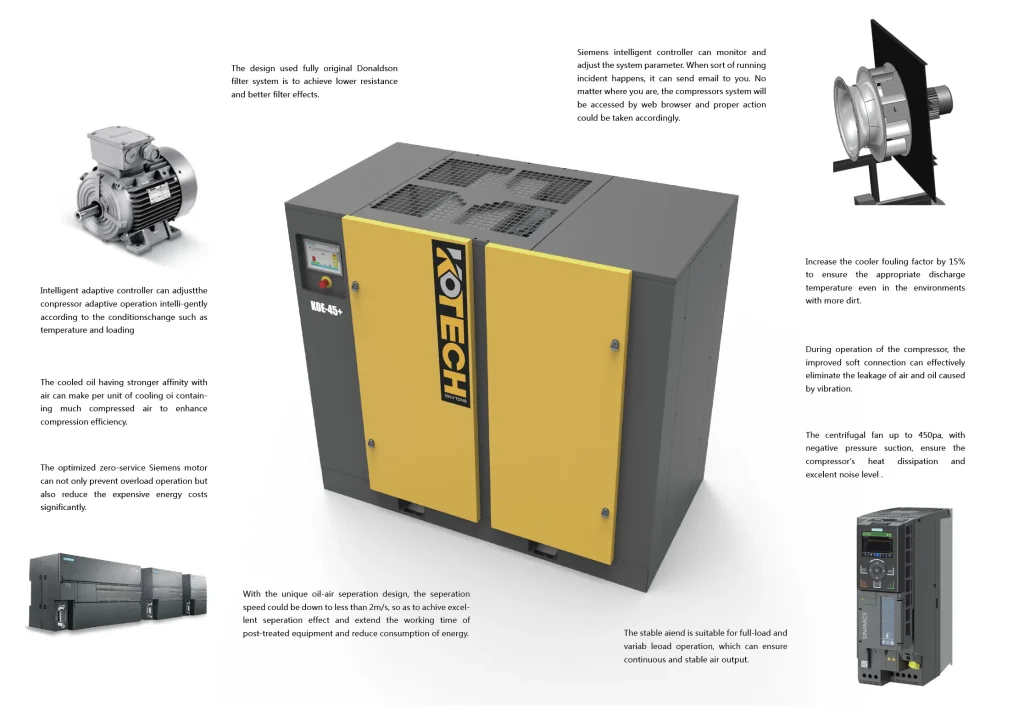
Two-stage compression significantly boosts efficiency by reducing heat and optimizing work input. Expect 10-15% energy savings and lower operating temperatures, making it a smarter choice for most demanding industrial applications requiring pressures above 7 bar.
Unlock Up to 15% Energy Savings: The Unbeatable Logic of Two-Stage Compression
Related: Double stage compressor · enhanced volumetric efficiency · isothermal compression · reduced power consumption · compressor ROI · industrial air systems
The Core Principle: Approaching Isothermal Compression
Look, the goal in air compression is always to get closer to isothermal compression – compressing without generating heat. Heat is wasted energy. Single-stage compressors fight this directly, generating substantial heat that requires more work to overcome.
Two-stage systems introduce an intercooler between stages. This cools the air, reducing its volume before the second compression. Less volume means less work needed, a direct path to efficiency gains. It’s fundamentally about minimizing wasted thermal energy.
Dissecting the Efficiency Gains
H3: Reduced Work Input
By cooling the air between stages, the second stage starts with a denser, cooler charge. This significantly lowers the overall work required. We’re talking real numbers here. An energy audit by Kaeser Compressors in 2018 showed two-stage rotary screw compressors consistently consume 10-15% less power for the same output compared to single-stage units at pressures above 7 bar. This translates directly to your utility bill.
Think of it: less energy input for the same air output. It’s a simple, powerful equation.
H3: Lower Discharge Temperatures
Intercooling also drastically drops the discharge temperature. Where a single-stage unit might hit 100-120°C, a two-stage typically operates around 60-80°C. This isn’t just a comfort metric; it’s critical for component longevity and air quality.
Lower temperatures mean less thermal stress on seals, bearings, and lubricants, extending compressor life. It also reduces condensate load downstream, improving air dryer performance and preventing contamination in sensitive processes.
H3: Enhanced Volumetric Efficiency
Cooler air is denser air. When the intercooler reduces the air temperature, it increases the air’s density entering the second stage. This boosts the volumetric efficiency – meaning more actual air delivered per unit of displacement. You get more CFM/m³/min for your money.
For engineers, this means a more stable, consistent air supply, especially critical in applications with fluctuating demand.
Practical Considerations and When to Choose
From my experience on countless factory floors, two-stage compression is almost always the superior choice for continuous duty cycles and pressures above 7 bar (100 PSI). The upfront cost might be marginally higher, but the energy savings deliver a rapid return on investment.
A study by the Compressed Air & Gas Institute (CAGI) in 2021 estimated that for systems running over 4,000 hours annually, the energy savings from a two-stage compressor typically pay back the cost difference within 2-3 years. That’s a compelling ROI for any procurement decision.
Now, a caveat: for very low-pressure applications (e.g., under 5 bar) or highly intermittent use where the compressor runs only a few hours a day, a single-stage unit might still offer a sufficient solution due to its simpler design and slightly lower initial cost. But for critical, continuous operations, you’d be leaving money on the table.
Expert Insights
"Having managed industrial air systems for over a decade, I've consistently seen two
— stage compressors deliver on their promise. The initial investment is quickly dwarfed by the long-term operational savings, especially in facilities running 24/7. It's not just about the compressor; it's about the entire system's health and your bottom line."
Further Reading
- Calculating Total Cost of Ownership (TCO) for Industrial Compressors
- How to choose the right CFM for a 2-stage screw compressor?
- Single Stage vs. Two Stage Air Compressors: Which is right for your plant?
- The Logic Behind Quiet Air Compressors A Structural Analysis of Noise Reduction in Compressed Air Systems
- Two-Stage Compression, Compressor Efficiency, Energy Savings, Industrial Air Compressors, Intercooling Benefits – How the M12 Air Co
- The Logic Behind Off Road Air Compressors A Structural Analysis for Expedition Vehicles
- How Silent Air Compressor Technology Is Elevating Professional Workshop Efficiency
- The Logic Behind air dryer for air compressor A Structural Analysis of Industrial Efficiency
Related Reading: Two-Stage vs Single-Stage Compression: How Technology Reduces Energy Waste