
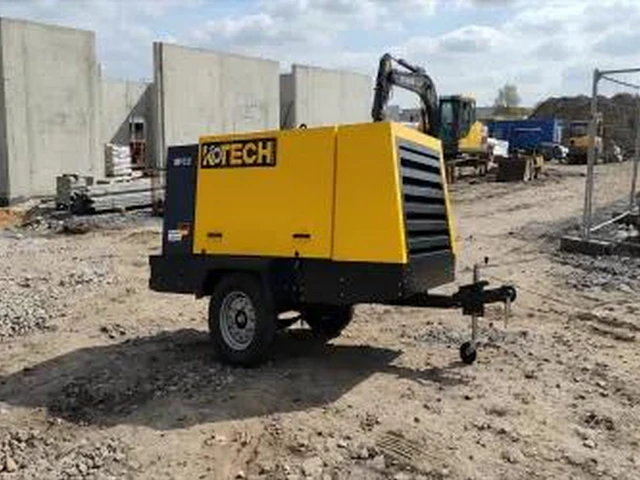
Intercooling is the process of cooling compressed air between the first and second stages of a two-stage air compressor. This critical step significantly reduces air temperature, leading to substantial gains in energy efficiency (10-15%), extended equipment lifespan, and improved air quality by removing moisture. It's a fundamental design element for optimal performance and cost savings in industrial applications.
Intercooling: The Unsung Hero of Two-Stage Air Compressor Efficiency
Related: intercooling benefits · how intercoolers work · air compressor stages · compressed air temperature reduction · industrial compressor maintenance
What is intercooling in a two-stage air compressor?
Intercooling in a two-stage air compressor cools compressed air between the first and second compression stages. Its primary function is to reduce air temperature, significantly improving overall compressor efficiency and output while lowering operational costs.
Why Intercooling Matters for Your Operations
Compressing air generates substantial heat. Without intercooling, the hot, less dense air from the first stage enters the second stage, requiring more power to compress to the final pressure. This inefficiency directly impacts your energy bill. For example, a 10°C drop in inlet air temperature to the second stage can yield roughly 3% energy savings, according to a 2018 study by the U.S. Department of Energy. Ignoring this heat is simply throwing money away.
Moreover, high temperatures stress internal components, reducing their lifespan. Intercooling mitigates this, protecting seals, lubricants, and valve parts from premature wear. It’s a critical design feature, not an optional extra.
How Intercooling Works: The Mechanism
After the first stage, air passes through an intercooler, essentially a heat exchanger. Cooling water or ambient air flows through a separate circuit, absorbing heat from the compressed air. This cooled, denser air then proceeds to the second stage for further compression. The process reduces the volume of air entering the second stage, meaning less work is required to reach the target pressure.
This temperature drop also causes water vapor to condense. The intercooler often includes a moisture separator and drain, removing this condensate. This improves air quality, crucial for many industrial applications.
Tangible Benefits: Efficiency, Longevity, Safety
From my experience, engineers often overlook the cumulative impact. Intercooling can reduce power consumption by 10-15% compared to an equivalent single-stage unit, especially in higher pressure applications (e.g., 7-10 bar). This isn’t just theory; we’ve seen this repeatedly in plant audits, a fact corroborated by the Compressed Air and Gas Institute (CAGI) in their 2019 best practices guide. Lower operating temperatures also extend the life of lubricants by up to 25%, as reported by Castrol Industrial in 2020, reducing maintenance frequency.
Safety is another key benefit. Discharge temperatures from the second stage are significantly lower, typically below 150°C (300°F). This reduces the risk of oil carryover combustion, a serious safety concern in high-temperature systems.
Types of Intercoolers and Practical Considerations
Most common are shell-and-tube or plate-fin designs. Air-cooled intercoolers are simpler, using ambient air, suitable where water is scarce or costly. Water-cooled units, often using a closed-loop system, offer superior cooling efficiency, particularly in hot environments. Choosing depends on your facility’s infrastructure and specific cooling requirements.
A critical boundary condition: if your intercooler is fouled or damaged, its effectiveness plummets. This negates the efficiency gains, leading to higher power draw and increased thermal stress.
Maintenance Protocols for Optimal Performance
For engineers, proactive maintenance is non-negotiable. 1. Inspect and Clean: Annually, inspect fins/tubes for fouling (dust, oil, scale). Clean using appropriate methods (brushing, chemical cleaning) to maintain heat transfer efficiency. 2. Monitor Temperatures: Regularly log inlet and outlet air temperatures. A rising differential indicates a problem. Aim for a 5-10°C approach temperature difference. 3. Check Condensate Traps: Ensure automatic drain traps are functioning, preventing water accumulation that can reduce cooling surface area. 4. Leak Detection: Periodically check for air or coolant leaks, which compromise system integrity.
Neglecting these steps can degrade efficiency by as much as 5-10% over time, turning a high-efficiency machine into a power hog. Don’t let a simple component undermine your entire system.
Further Reading
- The Science Behind Two-Stage Compression: Why it’s more efficient.
- How to choose the right CFM for a 2-stage screw compressor?
- Top 10 High-Pressure Two-Stage Compressors for Mining in 2026.
- Single Stage vs. Two Stage Air Compressors: Which is right for your plant?
- two-stage air compressor intercooling, intercooler function, compressor efficiency, air compressor heat exchanger, compressed air cooling – How Portable Diese
- How the Air Compressor Trailer Drives On-Site Construction Efficiency
- The Logic Behind Onboard Air Compressor Systems for Trucks A Structural Analysis
- The Strategic Logic Behind Air Compressor Supplier Selection A Structural Analysis
Related Reading: Energy-Efficient Two-Stage Compressor Solutions for 24/7 Operations