
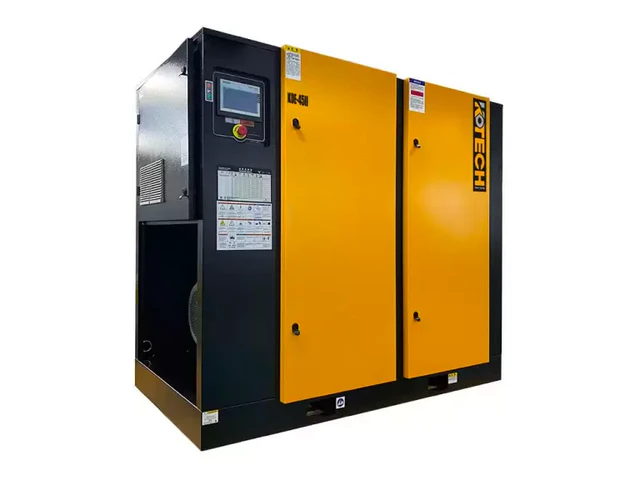
In the demanding packaging and printing sectors, the right compressed air system isn't just a utility; it's a cornerstone of operational efficiency and product quality. Two-stage air compressors are indispensable for these industries, delivering the consistent pressure, high purity, and energy efficiency required to prevent costly downtime and product defects. This guide offers practical insights from a seasoned expert on why dual-stage units are the smart investment for your critical applications.
Elevating Production Standards with Dual-Stage Compressed Air
Key Takeaways
- Two-stage compressors offer significant energy savings.
- They ensure stable pressure for precision operations.
- High air purity prevents product defects.
- Reduces costly production downtime.
- Essential for continuous, demanding industrial use.
Related: Industrial air compressors · compressed air systems · packaging machinery · printing presses · energy efficiency · air purity · oil-free compressors · rotary screw compressors · downtime reduction · ISO 8573-1.
Here are the key insights you need to know about two-stage air compressors in packaging and printing:
- Two-stage compressors deliver superior energy efficiency, often 15-20% better than single-stage units, crucial for continuous operations.
- They provide more consistent pressure and cooler discharge air, extending the lifespan of sensitive packaging and printing machinery.
- High air purity, meeting ISO 8573-1 standards, is non-negotiable to prevent product contamination and equipment damage.
- Investing in a robust dual-stage system significantly reduces unscheduled downtime, a major cost factor in fast-paced production environments.
Look, in packaging and printing, your compressed air system isn’t just an afterthought. It’s the lifeblood of your entire operation. After over a decade on the floor, I’ve seen firsthand how a subpar air compressor can bring a high-speed line to its knees. That’s why when we talk about critical applications in these sectors, two stage air compressors for packaging and printing industries aren’t merely an option; they’re an absolute necessity. You need consistent pressure, clean air, and energy efficiency, and a dual-stage unit delivers on all fronts where single-stage often falls short.
Why Two-Stage Compressors Are Non-Negotiable
The demands of modern packaging and printing are relentless. Think about the precision required for high-resolution graphics or the rapid cycling of a form-fill-seal machine. These operations need a steady, reliable air supply. Single-stage compressors, while cheaper upfront, struggle to maintain consistent pressure under continuous load, leading to pressure drops that can impact product quality, slow down machinery, or even cause outright failures.
A two-stage rotary screw compressor compresses air in two separate cylinders or stages. This process allows for more efficient compression, less heat generation, and ultimately, a higher volume of air at a given pressure with less energy input. For plants running 24/7, or even just for long shifts, that efficiency translates directly to significant operational savings. It’s a fundamental shift from merely having air to having optimized air.
The Cost of Compromise: Data Driving Decisions
Energy consumption is a massive concern for any manufacturing facility. Compressed air systems are notorious energy hogs if not properly managed. The International Energy Agency (IEA) consistently highlights that industrial energy efficiency is a key area for cost reduction and sustainability. Their “Energy Efficiency 2023” report underscores that optimizing industrial processes, including compressed air, can lead to substantial energy savings, often in the range of 20-30% for inefficient systems. This isn’t pocket change; for large-scale operations, we’re talking hundreds of thousands of dollars annually.
Furthermore, the global packaging market alone was valued at USD 1.1 trillion in 2023 and is projected to grow (Grand View Research, 2024). The printing industry, while evolving, also remains a multi-billion dollar sector globally, with Statista (2024) consistently reporting significant revenue streams. As these industries expand and demand for speed and quality intensifies, the cost of downtime skyrockets. Unplanned downtime can cripple production schedules and erode profits. For instance, Deloitte’s 2023 manufacturing outlook suggests that the average cost of unplanned downtime in certain high-stakes manufacturing sectors can easily exceed $260,000 per hour. Investing in reliable equipment like a dual-stage compressor is a direct hedge against these catastrophic losses.
Beyond Pressure: The Criticality of Air Quality
It’s not just about pressure; it’s about purity. In packaging, any oil residue or particulate matter in the compressed air can contaminate products, leading to recalls, rejections, and severe brand damage. Printing presses, especially digital and flexographic machines, are incredibly sensitive to moisture and oil. Even microscopic contaminants can clog nozzles, degrade print heads, or cause imperfections in the final output.
This is where air quality standards become paramount. ISO 8573-1:2010 provides the international classification for compressed air purity, detailing acceptable levels of particulates, water, and oil. Many packaging and printing applications demand Class 0 or Class 1 air quality, which is virtually oil-free and dry. Achieving these standards often requires not only a two-stage compressor but also a robust filtration and drying system. Frankly, if you’re not meeting these standards, you’re playing with fire, and I’ve seen too many good businesses get burned by it.
When Single-Stage Just Won't Cut It
While single-stage compressors might be suitable for intermittent, lighter-duty tasks like powering a small workshop’s tools, they simply aren’t engineered for the continuous, high-demand environments found in packaging and printing. Their compression ratio per stage is higher, leading to hotter discharge air and increased wear and tear on components. This means shorter lifespan, more frequent maintenance, and a higher risk of unexpected breakdowns.
A key boundary condition here: if your operation is truly small-scale, with very low, infrequent air demands – say, a small print shop that only uses a few air tools for setup, not for direct production – then a single-stage unit might suffice. But even then, if you anticipate any growth or increased reliance on pneumatic systems, you’re better off future-proofing with a two-stage system from the start. Trust me, upgrading later is always more expensive and disruptive.
Implementing the Right System for Your Operations
Choosing the right two stage air compressors for packaging and printing industries involves more than just picking a model. You need to assess your exact air demand (CFM), required pressure (PSI), and most importantly, the necessary air purity class. Consider factors like:
- Load Profile: Is your demand constant, or does it fluctuate? Dual-stage units handle continuous load more efficiently.
- Future Growth: Specifying a system with some headroom prevents costly upgrades down the line.
- Ancillary Equipment: Don’t forget the importance of dryers (refrigerated or desiccant), filters (particulate, coalescing, activated carbon), and air receivers. These are integral to achieving and maintaining air quality.
- Maintenance & Service: Partner with a reputable supplier who offers excellent service and readily available parts. Regular maintenance is key to maximizing the lifespan and efficiency of your investment.
Based on our experience, a well-designed dual-stage system, properly installed and maintained, will pay for itself through energy savings and reduced downtime within a few years. It’s not just an expense; it’s a strategic asset for your production line.
Expert Insights
"Don't skimp on your air system; it's a false economy. Quality air is non
— negotiable."
"Reliability prevents millions in lost production."
Further Reading
- How to Troubleshoot Basic Two Stage Air Compressor Issues
- Two Stage Air Compressor Applications in Glass Manufacturing
- Complete Guide to Two Stage Air Compressor Maintenance Schedules
- Using Two Stage Air Compressors for Spray Painting Cars
- Two Stage Air Compressors for Packaging and Printing Industries – Two Stage Air Comp
- Two Stage Air Compressor Applications in Oil and Gas Industries
- Two Stage Air Compressor for Paint Spraying: Buying Tips
- Two Stage Air Compressors for Woodworking and Carpentry Shops
Related Reading: Two Stage Air Compressor for Paint Spraying: Buying Tips