
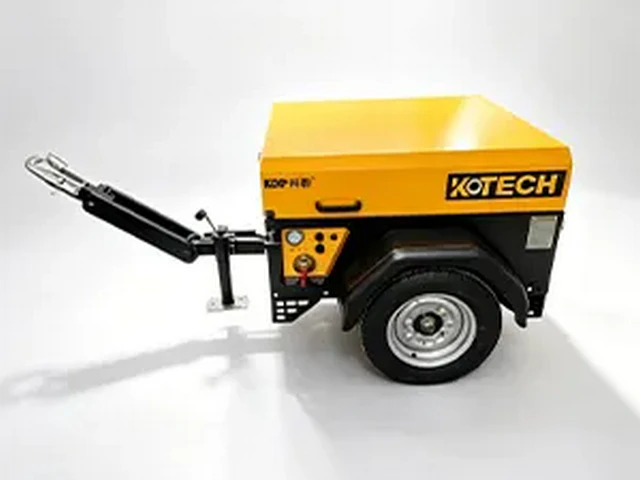
For serious industrial sandblasting, a stable 175 PSI from a two-stage air compressor isn't just a recommendation; it's an operational necessity. This pressure ensures optimal abrasive velocity, consistent media delivery, and superior surface preparation, directly impacting project timelines and coating adhesion. Anything less risks inefficiency, rework, and increased costs.
Achieving Peak Sandblasting Performance: The 175 PSI Imperative
Related: Stable blasting pressure · optimal abrasive impact · high-quality surface prep · compressor sizing for sandblasting · consistent media flow · industrial air solutions · coating adhesion
Sandblasting, or abrasive blasting, is a critical surface preparation technique used across various industries, from automotive restoration to heavy industrial coating. Its effectiveness hinges not just on the abrasive media used, but critically, on the power and consistency of the compressed air delivery. For demanding industrial applications, a stable 175 PSI from a two-stage air compressor isn’t merely a recommendation; it’s a fundamental requirement for achieving optimal results.
The Power of Pressure: Why 175 PSI? Sandblasting works by propelling abrasive particles at high velocity against a surface to clean, etch, or prepare it. The kinetic energy of these particles is directly proportional to their velocity, which in turn is largely determined by the air pressure.
- Efficient Cleaning and Stripping: Lower pressures (e.g., 90-120 PSI) might suffice for light-duty tasks or delicate surfaces. However, for removing stubborn rust, thick paint, mill scale, or preparing robust surfaces for industrial coatings, 175 PSI provides the necessary force to cut through contaminants quickly and thoroughly. This higher pressure ensures that abrasive particles impact the surface with enough energy to effectively scour and profile it, creating an ideal anchor pattern for new coatings.
- Increased Productivity: Higher pressure translates to faster work. A powerful blast stream reduces the time required to cover a given area, significantly boosting productivity and reducing labor costs on large-scale projects.
- Optimal Surface Profile: Achieving the correct surface profile (roughness) is paramount for coating adhesion. 175 PSI, when combined with appropriate media, consistently delivers the aggressive impact needed to create uniform and effective anchor patterns, preventing premature coating failure.
The Criticality of Stability: Why a Two-Stage Unit? It’s not enough to just reach 175 PSI; the pressure must be stable throughout the blasting operation. Fluctuating pressure leads to inconsistent results, wasted abrasive, and extended project times. This is where the two-stage air compressor becomes indispensable.
- Consistent Airflow and Pressure: Two-stage compressors compress air in two steps, cooling it between stages. This process is inherently more efficient and allows them to maintain a higher, more consistent pressure output over extended periods compared to single-stage units. For sandblasting, this means a steady stream of abrasive particles, leading to uniform surface preparation without hot spots or missed areas.
- Higher CFM at Higher PSI: While PSI dictates the force, CFM (Cubic Feet per Minute) determines the volume of air. Sandblasting requires both. Two-stage compressors are designed to deliver higher CFM at elevated pressures like 175 PSI, ensuring not only powerful impact but also a continuous, robust flow of abrasive.
- Durability and Longevity: Industrial sandblasting is a continuous, high-demand application. Two-stage compressors are built for heavy-duty, continuous operation. Their design, with intercooling and robust components, dissipates heat more effectively, reducing wear and tear on the compressor and extending its operational lifespan, making them a more reliable and cost-effective long-term investment for industrial use.
- Reduced Moisture Content: The intercooling in a two-stage compressor helps remove more moisture from the air before it reaches the dryer. Dry air is crucial for sandblasting to prevent clogging of the blast pot and nozzle, and to avoid contaminating the blast surface.
The Consequences of Compromise: Attempting industrial sandblasting with an undersized or single-stage compressor operating at lower, unstable pressures will inevitably lead to:
- Substandard Results: Inconsistent surface profiles, incomplete contaminant removal, and poor coating adhesion.
- Inefficiency: Slower progress, increased labor hours, and higher abrasive consumption due to re-blasting.
- Equipment Strain: Overheating and premature failure of the compressor, leading to costly downtime and repairs.
In conclusion, for any serious industrial sandblasting project, the combination of a stable 175 PSI output from a robust two-stage air compressor is not a luxury, but a necessity. It guarantees efficiency, consistency, and the high-quality surface preparation critical for the longevity and performance of subsequent coatings and finishes.
Further Reading
- What is intercooling in a two-stage air compressor?
- The Science Behind Two-Stage Compression: Why it’s more efficient.
- How to choose the right CFM for a 2-stage screw compressor?
- Top 10 High-Pressure Two-Stage Compressors for Mining in 2026.
- Sandblasting 175 PSI, Two-stage air compressor, Industrial sandblasting, Abrasive blasting pressure, Compressed air for sandblasting, Surface preparation – Single Stage vs. T
- Reliable Air Solutions for Deep Well Drilling Operations.
- The Logic Behind Heavy Duty Industrial Diesel Air Compressor Price A Structural Analysis
- How Air Ride Compressors Drive Precision and Performance in Automotive Suspension Systems
Related Reading: Two-Stage Air Compressor Solutions for Reducing Operational Costs