
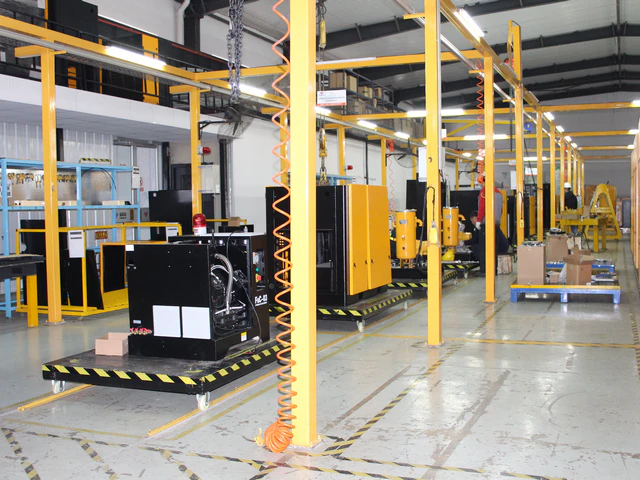
A two-stage air compressor is an essential upgrade for anyone needing sustained power and higher efficiency for demanding tasks. Unlike single-stage models, it compresses air twice, delivering significantly higher pressure (PSI) and cubic feet per minute (CFM) with less heat buildup. This translates to longer tool life, more reliable operation, and often, better energy economy for serious workshops, automotive shops, and light industrial applications. This guide cuts through the noise to tell you exactly what you need to know to make an informed decision for 2026 and beyond.
Mastering Two-Stage Air Compressors: Your 2026 Essential Handbook
Related: dual-stage compressor benefits · industrial air compressor guide · heavy-duty air compressor · compressed air system efficiency · air compressor buying guide · multi-stage air compressor · CFM PSI explanation
Key Insights:
- Two-stage compressors compress air twice, leading to higher PSI, cooler operation, and improved efficiency compared to single-stage units.
- They are ideal for heavy-duty, continuous applications like automotive shops, sandblasting, and manufacturing, requiring sustained high CFM.
- Choosing a two-stage unit offers better energy efficiency and extended tool lifespan due to consistent, high-pressure air delivery.
- Key buying factors include CFM @ PSI, tank size, duty cycle, and voltage, which directly impact performance and suitability for your specific needs.
- While a larger upfront investment, their durability and lower long-term operating costs often justify the price for professional users.
What Is a Two Stage Air Compressor? Ultimate Beginner’s Guide 2026
Alright, let’s get straight to it: a two-stage air compressor isn’t just a bigger version of the basic unit you might have in your garage. It’s a fundamentally different beast designed for serious work, delivering more power and efficiency for demanding applications. If you’re running an automotive shop, a busy fabrication space, or even a serious home workshop, understanding this technology is crucial for making the right investment.
What Makes a Two-Stage Compressor Different? The Core Mechanism
At its heart, the distinction lies in how the air is compressed. Imagine a single-stage compressor: air gets sucked in, compressed once by a piston, and then pushed into the tank. Simple enough for intermittent tasks like inflating tires or using a nail gun.
Now, a two-stage compressor takes that process a step further. It has at least two pistons, often of different sizes. Air is drawn into the first, larger piston cylinder, where it’s compressed to an intermediate pressure. This partially compressed air then travels through an intercooler – a critical component that cools the air down – before entering a second, smaller piston cylinder. Here, it gets compressed a second time to a much higher final pressure before being sent to the storage tank. This two-step process is the game-changer.
The Advantages of Dual-Stage Compression
This dual compression cycle brings a few significant benefits to the table. First, by compressing in two stages and cooling the air in between, the compressor runs cooler overall. Cooler operation means less wear and tear on components, extending the lifespan of the unit itself. Second, it allows the compressor to achieve much higher PSI (pounds per square inch) levels more efficiently. And third, because it’s working more efficiently, it can deliver a higher CFM (cubic feet per minute) at those elevated pressures, which is exactly what heavy-duty air tools demand.
Why You Need a Two-Stage Compressor: Performance & Efficiency Gains
When you’re running air tools that require a consistent, high volume of air at high pressure – think sandblasters, plasma cutters, impact wrenches, or paint sprayers – a single-stage unit will quickly fall short. It’ll struggle to keep up, cycle constantly, overheat, and ultimately burn out prematurely. That’s where the two-stage unit shines.
The ability to maintain a higher CFM at a higher PSI means your tools operate at their optimal performance, without “starving” for air. This isn’t just about power; it’s about productivity and tool longevity. A tool running on insufficient air pressure is less effective and experiences more strain.
Energy Efficiency Data Point
From an operational cost perspective, these compressors often offer superior energy efficiency for their output. According to the U.S. Department of Energy (2022), optimizing compressed air systems, which includes selecting the correct compressor type for the application, can lead to energy savings of 20-50% in industrial settings. While a two-stage unit might draw more power upfront, its efficiency in delivering high-pressure air means it runs less often or more effectively for the same amount of work, translating to lower electricity bills over time for demanding tasks.
Real-World Applications: Where Two-Stage Units Shine
So, who really benefits from a two-stage air compressor? My experience tells me it’s anyone whose livelihood or serious hobby depends on reliable, consistent compressed air.
- Automotive Shops: From tire changes and engine work to body shop painting and grinding, these shops rely heavily on constant, high-pressure air for impact wrenches, air hammers, and paint guns. A two-stage unit is virtually mandatory here.
- Manufacturing and Fabrication: Plasma cutting, operating pneumatic machinery, grinding, and specialized assembly tools all require a steady, high-volume air supply. Downtime due to compressor inadequacy is simply not an option.
- Heavy-Duty Woodworking & Cabinetry: While nail guns are fine on single-stage, serious woodworking involves larger air sanders, spray finishing, and sometimes CNC machinery that needs more robust air supply.
- Agricultural Operations: Inflating large tires, powering pneumatic tools for equipment repair, and running sprayers often demand the consistent output of a two-stage compressor.
Market Trend Data
The demand for these robust units isn’t slowing down. A report by Grand View Research (2023) projected the global industrial air compressor market size to reach USD 45.7 billion by 2030, driven significantly by the manufacturing and automotive sectors. This growth underscores the ongoing need for reliable, high-performance compressed air solutions, with two-stage units playing a critical role in meeting those demands.
Decoding the Specs: Key Factors to Consider Before Buying
When you’re looking at purchasing a two-stage unit, don’t get hung up just on horsepower. While HP matters, it’s not the full story. Here’s what you really need to focus on:
- CFM @ PSI: This is the absolute most important specification. It tells you how much air (CFM) the compressor can deliver at a given pressure (PSI). Always match this to the highest requirements of your most demanding air tool. For example, a heavy-duty sandblaster might need 20 CFM at 90 PSI, while a paint gun might need 10-15 CFM at 40 PSI. Ensure your compressor can comfortably exceed these numbers.
- Tank Size (Gallons): The tank acts as a reservoir. A larger tank provides a buffer, allowing the compressor pump to run less frequently. This is especially good for intermittent, high-demand tools and reduces wear on the motor. For continuous applications, a larger tank helps maintain consistent pressure.
- Duty Cycle: This indicates how long the compressor can run continuously within a given period. Industrial-grade two-stage units often boast a 100% duty cycle, meaning they can run non-stop without overheating. Cheaper units might have a 50% duty cycle, meaning they need to rest as much as they run.
- Horsepower (HP): While not the sole factor, it correlates to the pump’s capability. Higher HP generally means more potential CFM.
- Voltage & Phase: Most heavy-duty two-stage compressors are 220V or even three-phase. Make sure your electrical setup can handle the requirements. This is a common oversight I’ve seen trip up many beginners.
- Noise Levels: Two-stage units can be loud. If your workspace is shared or noise is a concern, look for models designed for quieter operation or plan for sound dampening.
When a Single-Stage Might Still Be Enough: A Balanced Perspective
It’s easy to get caught up in the “bigger is better” mindset, but honestly, a two-stage compressor isn’t always the right answer. If your needs are truly light and intermittent – blowing dust, inflating car tires, running a small brad nailer for a few minutes at a time – a single-stage unit will save you money, space, and electrical hassle.
Don’t overspend on a two-stage model if you’re only going to use it for basic tasks. The initial cost, the electrical requirements, and the sheer size might be overkill. Only when you consistently push the limits of a single-stage compressor, or when your tools frequently starve for air, should you consider the upgrade.
Maintenance Tips for Longevity: Protecting Your Investment
A high-quality two-stage compressor is a significant investment, and proper maintenance is key to ensuring it lasts for decades.
- Regular Oil Changes: Just like your car, the compressor pump needs fresh oil. Follow the manufacturer’s recommendations, typically every 100-200 hours of operation for conventional oil, or less frequently for synthetic.
- Check Air Filters: A clogged air filter makes the compressor work harder, reducing efficiency and potentially leading to overheating. Inspect and clean/replace regularly.
- Drain Condensation: Compressed air contains moisture. This condenses into water in the tank. If left undrained, it causes rust and can contaminate your air tools. Drain the tank daily, or at least after every heavy use.
- Inspect Belts & Hoses: Look for cracks, wear, or fraying. Replace them before they fail.
Industry Guidelines Data
Adhering to manufacturer guidelines for maintenance isn’t just a suggestion; it’s a best practice backed by industry standards. For instance, the Compressed Air and Gas Institute (CAGI, 2021) consistently publishes technical data and best practices emphasizing scheduled maintenance to ensure optimal performance, safety, and longevity of compressed air systems. Ignoring these can void warranties and lead to costly repairs.
The Future of Compressed Air: Trends to Watch
Even in a seemingly traditional industry, innovation is happening. For 2026 and beyond, keep an eye on these trends:
- IoT Integration: Smart compressors with sensors that monitor performance, predict maintenance needs, and allow remote control are becoming more common, optimizing uptime and efficiency.
- Energy Recovery Systems: Harnessing the waste heat generated by compressors to heat water or space is an increasingly popular way to improve overall facility efficiency.
- Variable Speed Drive (VSD) Technology: While more common in rotary screw compressors, VSD is also making its way into larger reciprocating units, allowing the motor to adjust its speed to match demand, significantly reducing energy consumption during periods of lower usage.
- Quieter Operation: Manufacturers are continually investing in sound-dampening enclosures and pump designs to reduce noise levels, making workspaces more comfortable.
Ultimately, a two-stage air compressor is a powerhouse designed for serious work. It’s an investment that pays off in productivity, reliability, and the longevity of your tools, provided you choose the right one for your specific needs and maintain it properly.
Expert Insights
"From decades on the shop floor, I can tell you this: trying to run serious air tools on an undersized or single-stage compressor is a false economy. You'll burn out the compressor, damage your tools, and constantly battle with inadequate air supply. Investing in a properly sized two-stage unit is not just about power; it's about productivity, reliability, and ultimately, saving yourself headaches and money in the long run. Don't skimp where it counts."
Further Reading
- Maintenance Checklist to prevent costly downtime in industrial air systems.
- Total Cost of Ownership (TCO) Analysis: Single vs. Two-Stage.
- How much electricity can you save with a VFD Two-Stage Compressor?
- What is intercooling in a two-stage air compressor?
- Two Stage Air Compressor – How to choose the
- How Portable Diesel Air Compressor Suppliers Are Reshaping Heavy Industry and Construction Efficiency
- How the Air Compressor Trailer Drives On-Site Construction Efficiency
- The Logic Behind Onboard Air Compressor Systems for Trucks A Structural Analysis
Related Reading: How Does a Two Stage Air Compressor Work? Step-by-Step Explanation