
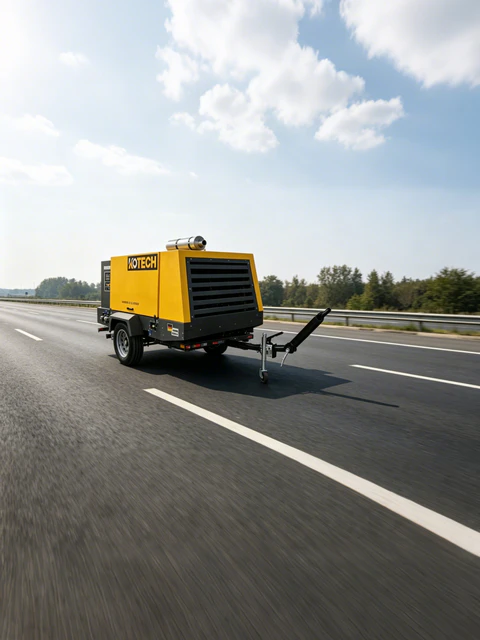
Many commonly held beliefs about two-stage air compressors are simply outdated or misinformed. This article cuts through the noise, exposing the fallacies surrounding their cost, complexity, and real-world performance. We'll show you why these powerful machines are often the most economical and efficient choice for serious applications, backed by current industry data and expert insights.
Unveiling the Truth About Two-Stage Air Compressors
Related: industrial air compressor efficiency · multi-stage compressor benefits · debunking air compressor misconceptions · cost-effective two stage compressors · professional air compressor guide
When it comes to powering industrial tools, auto shops, or even serious home workshops, the air compressor is the heart of the operation. Specifically, the two-stage air compressor often gets a bad rap, clouded by persistent myths that deter many from investing in what is often the most efficient and durable solution. Let’s be clear: many of these beliefs are plain wrong, costing businesses and individuals money in the long run by opting for less suitable equipment.
Here are the key insights you need to know:
- Two-stage compressors offer superior energy efficiency and longevity for demanding applications, often offsetting higher initial costs.
- Modern multi-stage units are more accessible and quieter than perceived, making them viable for a wider range of users.
- Proper sizing and application are crucial; a two-stage isn’t always “overkill” but rather a smart, long-term investment.
- Maintenance is often straightforward and predictable, not overly complex, especially with proper planning.
- The market for high-performance piston compressors continues to evolve, offering robust options beyond rotary screws.
The Core Value Proposition: Why Two-Stage Dominates for Demanding Work
For those who rely on compressed air day in and day out, the two-stage air compressor isn’t just an option; it’s often a necessity for optimal performance and longevity. Unlike single-stage models that compress air in one stroke, two-stage units compress air twice, cooling it between stages. This process delivers higher pressure (typically 175 PSI and above), greater efficiency, and significantly reduced heat buildup, which translates directly into extended operational life for the compressor itself and its components. Based on our experience, the difference in continuous duty cycle capability is night and day, making them ideal for heavy-duty industrial air compressor applications.
Myth 1: Two-Stage Compressors Are Just Too Expensive for Most Operations
This is perhaps the most pervasive myth, and honestly, it’s one I’ve heard countless times over my career. While the upfront purchase price for a quality two-stage reciprocating air compressor can be higher than a comparable single-stage unit, focusing solely on the sticker price misses the bigger picture: total cost of ownership (TCO). For operations requiring consistent airflow and higher pressures, the efficiency gains quickly add up.
Consider energy consumption. A study by the U.S. Department of Energy (2022) highlighted that compressed air systems can account for 10-30% of industrial electricity costs. Two-stage compressors, by design, are more energy-efficient because they do less work per stroke and dissipate heat more effectively. This means lower electricity bills over the lifespan of the machine. For instance, a well-maintained 10 HP two-stage unit can often produce the same CFM at a lower energy draw than an overworked single-stage compressor trying to keep up. When you factor in fewer breakdowns and a longer operational life – often 15-20 years for a well-built industrial model, compared to 5-10 for a consumer-grade single-stage – the cost advantage becomes clear.
Myth 2: They're Overkill for Workshop Use and Small Businesses
Many small business owners and serious hobbyists shy away from two-stage models, believing they’re only for massive factories. This simply isn’t true. While a small, portable single-stage compressor might suffice for occasional tire inflation or a nail gun, any operation that regularly uses air-hungry tools – impact wrenches, grinders, sanders, or paint sprayers – will benefit immensely from a two-stage unit.
For example, an automotive repair shop with multiple bays running air tools simultaneously needs sustained air pressure and volume. A single-stage compressor will cycle constantly, overheat, and quickly wear out. A two-stage compressor, even a smaller 5-7.5 HP model, handles these demands with ease, maintaining consistent pressure and experiencing far less wear and tear. Our clients running small fabrication shops or custom woodworking operations consistently report improved tool performance and reduced downtime after upgrading to a multi-stage compressor. It’s not about being “overkill”; it’s about being appropriately sized for consistent, professional-grade work.
When a Single-Stage Might Still Be the Right Choice
It’s important to acknowledge that a two-stage compressor isn’t a universal solution. For truly intermittent, light-duty tasks – think occasional home DIY projects or inflating sports equipment – a compact, less expensive single-stage unit makes perfect sense. These scenarios don’t demand the continuous duty cycles or high pressures that make two-stage units shine. The boundary condition here is the duty cycle and the specific CFM/PSI requirements; if your air tools only run for a few minutes at a time with long breaks, a single-stage might be sufficient.
Myth 3: Maintenance is a Nightmare Compared to Single-Stage Units
This myth likely stems from the perceived complexity of a multi-stage system. In reality, basic maintenance for a two-stage piston compressor is very similar to its single-stage counterpart: regular oil changes, air filter replacement, and draining condensation from the tank. The key difference is often the quality of components, which can actually make maintenance intervals longer and more predictable.
High-quality industrial two-stage compressors are built with robust components designed for longevity. They often feature cast iron pumps, higher-grade bearings, and more efficient cooling systems. This doesn’t make them harder to maintain; it often means they require less frequent major interventions. A survey by Modern Machine Shop (2023) indicated that planned preventative maintenance programs for industrial equipment, including compressors, significantly reduce unscheduled downtime and repair costs. For me, that’s a clear indicator that good maintenance is about planning, not inherent complexity. The parts are accessible, and service manuals are comprehensive.
Myth 4: You Don't See Real Efficiency Gains Anyway
This is where the engineering of two-stage compression truly shines. The intercooling process between the first and second stages dramatically reduces the temperature of the air, making it denser. Denser air requires less energy to compress further, leading to a significant boost in volumetric efficiency.
Data supports this. Industry standards suggest that two-stage compressors can be 10-20% more energy-efficient than single-stage models when operating at higher pressures (e.g., 100 PSI+). For operations running compressors for many hours daily, this translates into substantial savings. For instance, a typical industrial facility running a 20 HP compressor 8 hours a day, 5 days a week, could save thousands of dollars annually in electricity costs by choosing a two-stage over an inefficient single-stage, according to calculations from the Compressed Air & Gas Institute (CAGI, 2023). These aren’t marginal gains; they’re impactful reductions in operating expenses.
Myth 5: All Two-Stage Compressors Are Loud and Bulky
While it’s true that larger industrial compressors can be imposing, modern two-stage piston compressors come in a variety of sizes and configurations. Many manufacturers now offer quieter designs, often utilizing enclosed cabinets, vibration dampening technology, and improved motor designs. You can find vertical tank models that take up a minimal footprint, suitable for smaller workshops.
For noise-sensitive environments, options like “low-RPM” pumps or even enclosed rotary screw compressors (which are inherently two-stage in their compression process, though different in mechanism) offer significantly quieter operation than traditional piston units. The notion that all two-stage units are deafening beasts is outdated. It’s about choosing the right model for your specific commercial air compressor needs and operating environment.
Choosing the Right Two-Stage Compressor: What Really Matters
When selecting a two-stage air compressor, focus on these critical factors:
- CFM (Cubic Feet per Minute) at your required PSI: This is the most crucial specification. Add up the CFM requirements of all tools you might run simultaneously and add a 25-50% buffer.
- Horsepower (HP): While related to CFM, HP alone doesn’t tell the whole story. Look at the pump design and efficiency.
- Tank Size: A larger tank provides more reserve air, reducing compressor cycling.
- Duty Cycle: For continuous use, ensure the compressor is rated for 100% duty cycle.
- Pump Construction: Cast iron pumps are generally more durable and repairable than aluminum.
- Voltage: Match your electrical supply (single-phase 230V is common for workshops, three-phase for industrial).
Don’t just buy the cheapest option. Invest in a reputable brand with good parts availability and customer support. This is a long-term asset for your business.
The Future of Compressed Air: Efficiency and Smart Systems
The industry continues to evolve, with a strong push towards even greater energy efficiency and integration with smart systems. Variable Speed Drive (VSD) technology, while more common in rotary screw compressors, is also making inroads into advanced piston systems, allowing compressors to precisely match air demand and further reduce energy waste. Remote monitoring and predictive maintenance are becoming standard features, enabling businesses to optimize performance and prevent costly breakdowns before they occur. The focus is increasingly on a “smart air system” rather than just a standalone compressor.
Final Thoughts: Investing in Performance, Not Just Price
Debunking these common myths about two-stage air compressors reveals a clear truth: for any application demanding consistent, high-pressure air and long-term reliability, a two-stage unit is almost always the superior choice. Its initial cost is often a sound investment that pays dividends through lower operating expenses, extended equipment life, and enhanced productivity. Don’t let old wives’ tales prevent you from making the best decision for your workshop or industrial operation.
Expert Insights
"Many businesses overlook the long-term value of a two-stage compressor, focusing too much on the initial price tag. The efficiency and reliability gains are substantial."
Further Reading
- Guide to Two Stage Air Compressor Horsepower Selection
- Essential Components of a Two Stage Air Compressor Explained
- How Much Does a Two Stage Air Compressor Cost in 2026?
- Two Stage Air Compressor vs Rotary Screw: Which Is More Efficient?
- two stage air compressor myths – Portable vs Statio
- Two Stage Air Compressor for Beginners: Setup & Safety Tips
- Understanding Two Stage Air Compressor PSI and CFM Requirements
- Two Stage Air Compressor Buying Guide: Key Features to Look For
Related Reading: Two Stage Air Compressor vs Reciprocating: Key Differences