
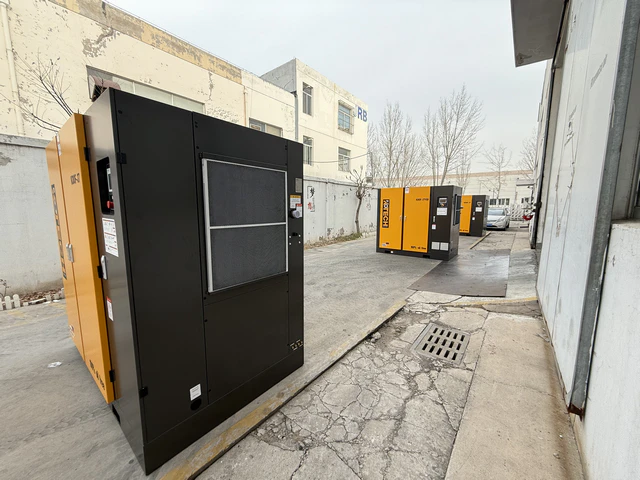
Navigating a two-stage air compressor spec sheet can feel like reading hieroglyphs, but it’s crucial for making a smart investment. This guide, straight from a seasoned pro, cuts through the jargon to show you exactly which numbers matter most. We'll focus on real-world performance metrics and hidden costs, ensuring you pick a compressor that truly meets your operational demands without overspending or underperforming.
Deciphering Two Stage Air Compressor Specs
Related: Air compressor specifications · industrial compressor ratings · CFM and PSI interpretation · duty cycle explanation · compressor pump types · motor voltage requirements · air dryer integration · noise reduction features · maintenance considerations.
Understanding a two-stage air compressor spec sheet isn’t just about reading numbers; it’s about translating those figures into real-world performance for your shop. After more than a decade in this industry, I’ve seen countless folks make expensive mistakes by misinterpreting these documents. The truth is, the right compressor can boost productivity and cut costs, while the wrong one becomes a frustrating money pit.
Here are the key insights you need to walk away with:
Don’t just look at HP; CFM at a specific PSI is your true output metric. Prioritize duty cycle and pump type based on your application – continuous vs. intermittent use is critical. Factor in electrical requirements and sound levels early to avoid costly installation headaches. Understand the difference between single-stage and two-stage pressure delivery for optimal tool performance. Always verify warranty and local service availability; it’s often overlooked until it’s too late.
Why Most People Get Two-Stage Compressor Specs Wrong
The biggest pitfall? Focusing on horsepower (HP) alone. It’s a marketing number, not a performance metric. I’ve watched many customers buy a “bigger” HP compressor only to find it can’t keep up with their tools. The actual output you need to care about is Cubic Feet per Minute (CFM) delivered at a specific Pounds per Square Inch (PSI). This tells you how much air the compressor can actually produce and sustain under pressure.
Think of it this way: a powerful engine doesn’t mean a fast car if the transmission is weak. CFM at PSI is your transmission. According to the U.S. Department of Energy (DOE) in 2021, compressed air systems account for up to 10% of all industrial electricity consumption, with inefficient systems wasting significant energy. Mismatching your compressor can directly contribute to that waste.
The Real Metrics: CFM, PSI, and Tank Size
Let’s break down the essential figures.
CFM (Cubic Feet per Minute): This is the volume of air your compressor can deliver. Always check the “CFM @ X PSI” rating. If your air tools require 15 CFM at 90 PSI, you need a compressor that exceeds that, usually by a 20-30% margin for safety and future expansion. Many spec sheets list “displacement CFM,” which is theoretical and much higher than “delivered CFM.” Ignore displacement CFM for buying decisions. PSI (Pounds per Square Inch): This is the pressure. Two-stage compressors build pressure in two steps, delivering higher sustained PSI (typically 175-200 PSI) more efficiently than single-stage units. This makes them ideal for demanding applications like impact wrenches, sandblasters, or paint sprayers that need consistent high pressure. Tank Size (Gallons): The tank stores compressed air. A larger tank provides a buffer, allowing the pump to run less frequently. This is crucial for intermittent, high-demand tools. However, a large tank doesn’t compensate for insufficient CFM; it just delays the inevitable pressure drop if the pump can’t keep up.
Frankly, I think many buyers get fixated on a huge tank, believing it solves all their air problems. It doesn’t.
Decoding Duty Cycle and Pump Type
These two specs reveal the compressor’s true workhorse capability.
Duty Cycle: This is the percentage of time a compressor can run within a given period without overheating. A 50% duty cycle means it can run for 30 minutes in an hour. Many industrial two-stage compressors offer 70-100% duty cycles, meaning they can run almost continuously. If your operation requires constant airflow, like a busy automotive shop or a manufacturing line, a high duty cycle is non-negotiable. Using a low-duty cycle compressor for continuous work will burn out the motor and pump quickly. Pump Type: Most two-stage compressors are piston-driven. Look for cast iron pumps, which are more durable and dissipate heat better than aluminum. Oil-lubricated pumps generally last longer and run cooler than oil-free versions, though oil-free might be preferred for certain clean-air applications (like dental offices or some food processing) where an air dryer and filtration are paramount anyway. Rotary screw compressors, while also two-stage, are a different beast entirely, designed for 100% continuous, heavy industrial use, but their spec sheets are read differently.
Electrical Requirements and Sound Levels: Don't Get Zapped
These details are often skimmed over, leading to expensive installation surprises.
Voltage and Phase: Two-stage compressors are typically 230V or 460V, and often require three-phase power for larger industrial units. Verify your shop’s electrical service before buying. Converting single-phase to three-phase, or upgrading your electrical panel, can add thousands to your total cost. Amperage (Amps): This tells you the circuit breaker size you’ll need. Don’t undersize it. Decibels (dB): Compressor noise can be a serious issue, especially in a shared workspace or residential area. A difference of 10 dB means the sound is perceived as twice as loud. Some industrial compressors can hit 90+ dB, requiring hearing protection or a separate compressor room. Quieter models (60-70 dB) are available but often at a premium.
Advanced Considerations for Pro-Level Selection
Air Dryers and Filtration
A two-stage compressor inherently generates heat, which means moisture in the compressed air. For painting, sandblasting, or any moisture-sensitive application, an air dryer (refrigerated or desiccant) and inline filters are essential. The spec sheet might mention “air dryer integrated” or “filter ready.” This impacts air quality and tool longevity. Industry data from the Compressed Air & Gas Institute (CAGI) in 2022 indicates that proper maintenance, including clean, dry air, can extend compressor lifespan by 30-50%.
Warranty and Service Network
This is where many budget buys fall apart. A great price means nothing if parts are unavailable or service is miles away. Look for a strong warranty (at least 2-5 years on the pump) and a reputable local dealer network. This point, I’ve seen too many times, becomes the critical differentiator between a smart buy and a regrettable one.
When a Two-Stage Isn't the Answer
While powerful, a two-stage compressor isn’t always the only answer. For light, intermittent tasks like inflating tires or running a small nail gun, a portable single-stage compressor is more than sufficient and far cheaper. Conversely, if you’re running a massive manufacturing plant with continuous, high-volume air demands, a rotary screw compressor will be more efficient and durable in the long run. A report by Grand View Research (2023) projected the global industrial air compressor market size to reach over $37 billion by 2030, driven by manufacturing and construction, underscoring the demand for robust, reliable units – but also the importance of choosing the right type of robust unit.
The Bottom Line: Prioritize Your Needs
Reading a two-stage air compressor spec sheet like a pro means understanding your specific needs first. What tools will you run? How often? What are your power limitations and noise tolerance? With those answers, you can filter through the specs, prioritize CFM @ PSI, duty cycle, and electrical requirements, and make an informed decision that will serve your operation for years to come. Don’t let marketing jargon or a low price tag sway you from the numbers that truly matter.
Expert Insights
"Many buyers get fixated on a huge tank, believing it solves all their air problems. It doesn't."
"The truth is, the right compressor can boost productivity and cut costs, while the wrong one becomes a frustrating money pit."
"This point, I've seen too many times, becomes the critical differentiator between a smart buy and a regrettable one."
Further Reading
- Common Myths About Two Stage Air Compressors Debunked
- Guide to Two Stage Air Compressor Horsepower Selection
- Two Stage Air Compressor for Beginners: Setup & Safety Tips
- Understanding Two Stage Air Compressor PSI and CFM Requirements
- Two Stage Air Compressor Spec Sheet – Two Stage Air Comp
- Complete Guide to Two Stage Air Compressor Sizing & Pressure Ratings
- Two Stage vs Single Stage Air Compressor: Which Is Better for You?
- Maintenance Checklist to prevent costly downtime in industrial air systems.
Related Reading: Using Two Stage Air Compressors for Painting and Finishing